


YAOUNDÉ, CAMEROON — Cameroon is positioning itself for a larger role in Africa’s digital economy as US technology company Cybastion moves forward with plans for a $75 million AI-powered data centre and dedicated power facility in the Central African country.
The project forms part of a broader digital infrastructure partnership involving Cybastion and the Cameroonian government. It aims to increase domestic computing capacity while supporting the country’s ambitions in artificial intelligence, cloud services and digital transformation.
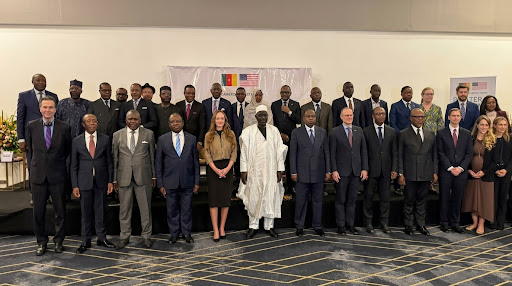
Cybastion announced the investment during a US trade mission to Cameroon involving American companies and government officials. The proposed facility would combine advanced computing infrastructure with its own power capacity, addressing one of the biggest challenges facing data centre development across Africa: access to reliable electricity.
Demand for African data infrastructure is increasing as governments and businesses adopt cloud services, artificial intelligence and digital platforms. Much of the continent’s advanced data centre capacity remains concentrated in a small number of markets, particularly South Africa, Nigeria, Kenya and Egypt.
Cameroon’s project could help broaden that infrastructure footprint into Central Africa, where limited computing capacity has historically required businesses to depend heavily on infrastructure hosted elsewhere.
Local data infrastructure can also reduce latency and give businesses greater options over where they process and store information. However, the economic impact will depend on whether the facility attracts cloud providers, telecommunications companies, financial institutions, technology businesses and other large users.
The inclusion of dedicated power generation is particularly significant. Data centres require large amounts of reliable electricity, while AI computing places even greater demands on power systems because of the high-performance processors required to train and operate advanced models.
African governments increasingly face the challenge of expanding digital infrastructure without placing additional strain on electricity systems that already struggle to meet household and industrial demand. Combining new computing capacity with dedicated power infrastructure could provide one model for addressing that constraint.
The investment also reflects growing international competition around Africa’s digital economy. American and Chinese technology companies have expanded their presence across the continent as governments invest in cloud infrastructure, fibre networks, cybersecurity and digital public services.
Cameroon has been developing its own digital transformation agenda as it seeks to improve connectivity and expand technology-driven public and private services. New data centre capacity could support those ambitions while creating opportunities for local technology companies and skilled professionals.
The $75 million project alone will not turn Cameroon into an African AI hub. Reliable connectivity, affordable electricity, technical skills, cybersecurity and clear data regulations will remain critical to attracting companies that need large-scale computing infrastructure.
Its significance lies instead in where the investment is happening. Africa’s AI infrastructure race is beginning to extend beyond the continent’s established technology centres, opening the possibility that countries in Central Africa could capture a larger share of future digital investment.
If Cameroon can combine computing capacity with reliable energy and connectivity, the planned facility could become part of a broader shift in which more African data is processed on African infrastructure rather than relying predominantly on computing resources located overseas.