


South Africa’s rapid growth as an African data centre hub is creating an unexpected opportunity for Eskom. The state-owned utility is looking to some of the world’s largest technology companies to use electricity that it now has available.
Eskom is pursuing large data centre operators as potential long-term customers after improvements across its generation fleet created spare capacity. Artificial intelligence and cloud computing facilities are particularly attractive because they consume large amounts of electricity and operate around the clock.
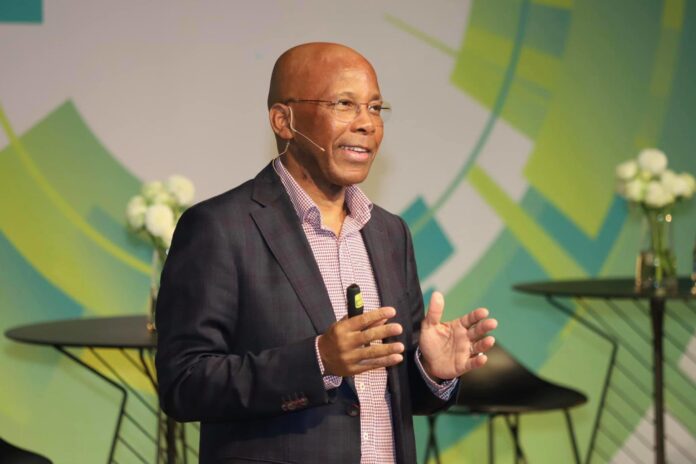
Chairperson Mteto Nyati said Eskom has held discussions with Amazon, Microsoft and Google as the utility searches for industries capable of supporting stronger electricity demand. These talks come at a very different time for a company that spent years struggling to generate enough power for South Africa.
Businesses and households experienced prolonged periods of load-shedding as breakdowns at ageing power stations weakened the electricity system. Many responded by installing solar panels, batteries and other alternative energy systems, reducing their dependence on Eskom.
Improved generation performance has since reduced unplanned outages, while weak economic growth and private electricity generation have softened demand from some traditional customers. Eskom now finds itself with electricity available to sell and needs large new customers to strengthen revenue.
The utility entered winter with about six gigawatts of spare capacity during peak periods, giving it its strongest reserve margin in almost a decade. South Africa has also passed 12 months without load-shedding for the first time since 2018, marking a significant improvement from the severe electricity shortages experienced earlier in the decade.
Data centres could provide part of the new demand Eskom needs, particularly as South Africa strengthens its position as Africa’s leading digital infrastructure market.
The country already hosts about 70% of the continent’s data centre capacity. Its established fibre networks, financial services sector and connections to international subsea cables have helped attract cloud computing companies and global infrastructure investors.
Artificial intelligence is expected to accelerate that expansion because AI systems require enormous computing capacity. Market forecasts suggest South Africa’s data centre industry could more than double in value to exceed $5 billion by 2031.
Investment is already increasing, with Cape Town recently approving plans by global data centre company Equinix for two facilities requiring about 170 megawatts of electricity. The scale of the development shows how quickly large technology projects can create significant new demand for power.
Nvidia, Cassava Technologies, Huawei Cloud and Oracle Cloud Infrastructure are also among the companies investing in Africa’s growing digital economy. Their expansion reflects wider demand for cloud services, artificial intelligence and computing infrastructure across the continent.
Attracting this type of investment could provide Eskom with a new group of high-consumption customers as demand from some traditional industries changes. Data centres are particularly valuable because servers operate continuously and require dependable electricity throughout the day.
AI infrastructure raises those requirements further. Training and running advanced artificial intelligence models requires substantial computing power, which translates directly into higher electricity consumption.
Eskom will still have to compete for this business because the electricity market has changed considerably during the years of load-shedding. Companies that once depended almost entirely on the utility now have access to private solar, wind and other energy projects.
Reliability will remain particularly important to data centre operators. Even brief interruptions can disrupt digital services, so facilities typically combine grid electricity with backup systems and increasingly secure power directly from renewable-energy producers.
Environmental considerations could also influence investment decisions. Global technology companies face growing pressure to reduce the carbon footprint of energy-intensive data centres, making access to renewable electricity an important part of choosing where to build new facilities.
South Africa has strong solar and wind resources that could strengthen its appeal if Eskom and independent producers can combine cleaner electricity with reliable supply. The opportunity therefore extends beyond selling surplus power and into building an energy system capable of supporting a rapidly expanding digital economy.
Grid capacity could become another challenge as the sector grows. Eskom may have surplus generation today, but several large data centres concentrated in the same locations could place significant pressure on transmission infrastructure.
The utility has about 2,000 megawatts of generating capacity in reserve that could return to service as demand rises. Longer-term expansion will still require substantial investment in transmission networks to connect new electricity generation with large industrial users.
South Africa’s ambition to become Africa’s leading destination for artificial intelligence, cloud computing and digital investment will therefore depend on more than technology companies building data centres. Electricity generation, transmission capacity, renewable energy and digital infrastructure will need to expand together.
Eskom’s improved performance has created an opportunity that appeared unlikely during the worst years of load-shedding. Instead of struggling to find enough electricity to meet demand, the utility is now trying to secure customers capable of consuming more of what it produces.
AI and cloud computing could become an important part of that new market if Eskom can provide technology companies with large amounts of reliable electricity at competitive prices. Its success could also determine whether South Africa turns its current data centre advantage into a much larger position in Africa’s emerging AI economy.