


Tanzania is accelerating efforts to attract private investment into energy and transport infrastructure as it strengthens its position as a gateway for trade across East and Central Africa.
Fresh investment agreements announced in Dar es Salaam this week have brought electricity transmission and natural gas infrastructure into focus. Pan-African infrastructure investor Africa50 is involved in the developments as Tanzania looks for new ways to finance projects needed to support industrial growth.
The agreements come as African governments increasingly turn to private and institutional investors to close infrastructure funding gaps. Tanzania faces the same challenge, with growing demand for electricity, transport and logistics requiring investment that cannot rely on public finances alone.
Energy infrastructure will play a central role in that expansion. Tanzania wants to grow its manufacturing, mining and mineral-processing industries, but those sectors need reliable electricity and sufficient transmission capacity before major investments can reach their potential.
Mining adds urgency to the infrastructure drive. Tanzania has significant deposits of gold, graphite, nickel and other minerals that have attracted international interest. Growing demand for critical minerals could bring further investment, particularly as global companies seek new sources of materials for batteries, electricity networks and clean-energy technologies.
Mineral resources alone, however, will not guarantee investment. Mining companies consider access to electricity, transport costs and export routes when deciding whether projects can compete commercially.
Tanzania’s infrastructure strategy could help address those concerns while creating opportunities beyond its own borders.
Its Indian Ocean coastline gives the country a natural advantage as a trade route for several landlocked economies. Zambia, Rwanda, Burundi and parts of the Democratic Republic of the Congo depend on regional transport corridors to reach international markets.
Dar es Salaam already serves as an important port for that trade. Improving the connections between the port, railways and inland transport networks could increase Tanzania’s share of regional freight while reducing logistics costs for neighbouring economies.
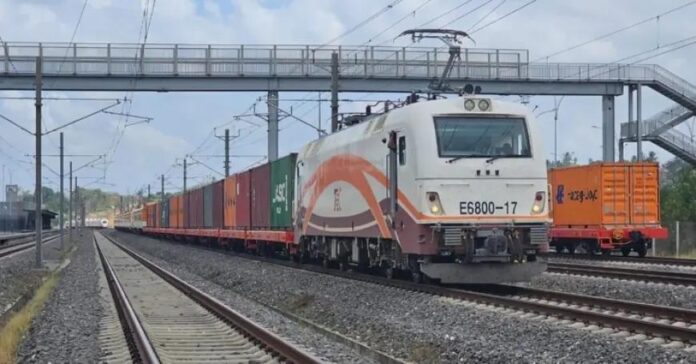
Rail investment has therefore become an important part of the country’s development strategy. Tanzania continues to expand its Standard Gauge Railway network, which aims to improve the movement of passengers and freight between Dar es Salaam and the interior.
The country also has the long-established TAZARA railway linking Tanzania with Zambia. Renewed efforts to modernise that route could strengthen connections between the Copperbelt and the Port of Dar es Salaam at a time when global demand for copper is rising. That creates an important opportunity for Tanzania.
Zambia and DR Congo hold some of the world’s most valuable copper and cobalt resources. As production grows, mining companies will need reliable routes to move larger volumes of minerals to global markets.
Several African corridors are competing for that trade. Angola is developing the Lobito Corridor towards the Atlantic, while southern routes connect the Copperbelt with ports in South Africa and Mozambique.
Tanzania offers an eastern alternative. Investment in railways, ports and energy could make that route more competitive while supporting Tanzania’s own industrial development. Stronger infrastructure could also encourage companies to process more minerals within the region rather than simply transporting raw materials abroad.
Africa50’s involvement reflects growing investor interest in this type of infrastructure. British International Investment has committed $20 million to Africa50’s Infrastructure Acceleration Fund, which invests in commercially viable projects across the continent.
Tanzania’s challenge will be converting investor commitments into operating infrastructure that businesses can use. Private capital can help finance construction, but investors also need predictable regulation and projects capable of generating sustainable returns. Governments must balance those commercial requirements with the need to keep strategic infrastructure accessible and affordable.
Public-private partnerships are becoming one way of managing that balance. They allow governments to retain a strategic role while bringing private capital and technical expertise into major projects. Successful partnerships could have effects far beyond construction.
Reliable electricity can support factories and mineral processing. Efficient railways can reduce the cost of moving commodities. Better ports can improve export competitiveness, while stronger regional connections can increase trade between African economies.
Those benefits align closely with Tanzania’s ambition to become a larger industrial and logistics hub.
Geography already gives the country an advantage. Infrastructure will determine how effectively it uses it.
As investment flows towards Africa’s minerals and expanding consumer markets, competition is growing between countries that want to become the continent’s preferred trade gateways. Tanzania is positioning itself firmly within that race, betting that stronger power, rail and port networks can turn its location into a much larger economic asset.