


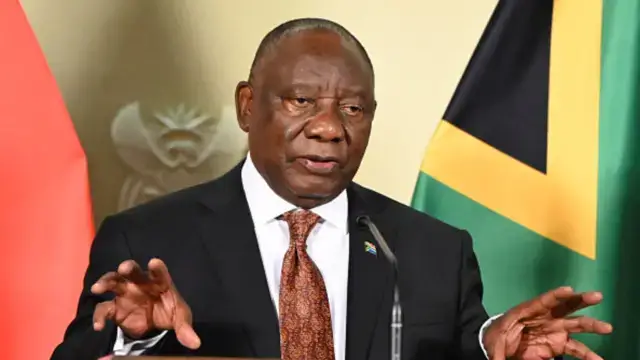
South Africa plans to send envoys to African countries and other regions of the world to address growing diplomatic concerns over migration tensions and attacks on foreign nationals.
President Cyril Ramaphosa announced this plan after meeting Kenyan President William Ruto at the Union Buildings in Pretoria. Their talks focused on migration, regional stability, and South Africa’s relations with other African countries. “There will be envoys, yes, there will be people that we will send around not only on the continent but also around the world,” Ramaphosa said.
This announcement follows a new wave of anti-migrant demonstrations and violence in South Africa. Several African governments have warned their citizens to remain cautious, and others have begun assisting nationals who want to return home.
Ramaphosa said South Africa seeks to handle migration through broader cooperation among countries of origin, transit, and destination. According to SAnews, South Africa and Kenya agreed to address migration through continental cooperation, economic development, and the creation of opportunities across Africa.
The president also rejected claims that South Africans are hostile toward other Africans.
“South Africans are not xenophobic. South Africans are Africans. They want to live with other Africans peacefully”.
His comments reflect Pretoria’s difficult position. The government must address public concerns about undocumented migration while protecting foreign nationals from intimidation, violence, and vigilante action.
Recent unrest has raised alarm across the continent. Reuters reported in May that Kenya, Malawi, Lesotho, and Zimbabwe warned their citizens in South Africa to exercise caution. Ghana also sought the African Union’s attention after reports of harassment involving one of its citizens.
Mozambique has also suffered losses. The government reported that five of its citizens died in anti-immigrant violence in Mossel Bay, Western Cape. South African police confirmed the deaths of two Mozambican men from assault injuries, and a separate incident involved the death of a South African teenager.
South Africa remains one of Africa’s main destinations for migrants, thanks to its larger economy and labor market. Official figures from Statistics South Africa indicate that the country hosts more than three million immigrants, representing 5.1% of the population. The same data shows that 63.6% of immigrants originate from the Southern African Development Community region.
Unemployment, poverty, crime concerns, and frustration over public services have often fueled anti-migrant sentiment. Migrant rights groups argue that authorities scapegoat foreign nationals for deeper economic and governance failures. Reuters reported that South Africa’s unemployment rate remains above 30%, disproportionately affecting black South Africans.
Groups campaigning against undocumented migration have intensified public pressure. According to Reuters, Operation Dudula has led campaigns targeting undocumented migrants and blocked some foreign nationals from entering public health facilities.
The government condemned violence linked to anti-immigration protests. A cabinet statement, cited by Reuters, said South Africans have the right to protest against illegal immigration but emphasized that violence connected to those protests is unacceptable and must face law enforcement action.
The planned diplomatic outreach aims to turn a domestic crisis into a regional conversation. South Africa wants to demonstrate its commitment to the safety of foreign nationals while calling for broader African cooperation on migration.
The challenge lies in turning that message into action. Envoys may help repair trust with African partners, but South Africa will also need stronger policing, clearer migration systems, and firm action against groups that use intimidation or violence.
For a country that presents itself as a champion of African cooperation, the stakes are high. Mobs, fear, or political slogans cannot solve migration. The solution requires lawful enforcement, honest regional dialogue, and protection for people who live, work, and seek safety across borders.