


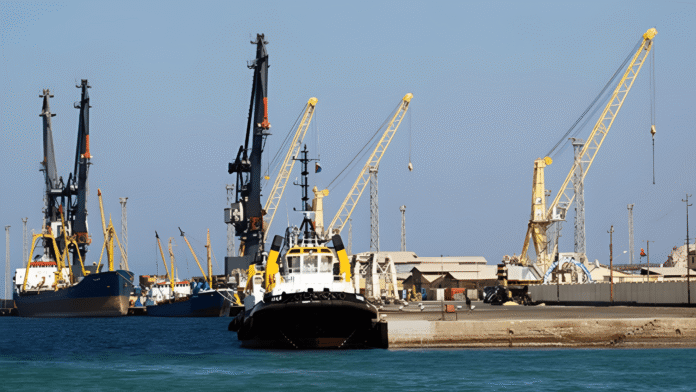
Red Sea Reckoning begins in March 2026. Instead of missile alerts, the first sign is changes in shipping records. At this time, Houthi forces in Yemen, Iranian military planners, and two Gulf groups, the UAE-Israel-Ethiopia group and the Saudi-Egypt-Turkey group, start connecting African conflicts to the wider Middle East deterrence dynamic.
This mechanism is not speculative. UAE shipments pass through Berbera en route to Sudan’s Rapid Support Forces, while Saudi diplomatic influence supports Port Sudan’s SAF, and Israeli technical teams provide consultations in Somaliland. Although Bab el-Mandeb acts as the geographic pivot, the main policy issue is whether Horn of Africa institutions can regulate proxy logistics. If they cannot, Gulf risk management costs shift onto African civilians.
Following the escalation after the June 2025 Iran-Israel conflict, the UAE’s air bridge to Sudan and Ethiopia expanded significantly. As a result, the Sudanese Armed Forces are preparing a counter-offensive in central Sudan, while Abiy’s forces have concentrated in Tigray.
As Gulf air defences intercept Iranian attacks, African battlefields hold military stockpiles. African Union cease-fire plans are overshadowed by ongoing shipments. Accountability is legal and practical: the African Charter on Democracy demands transparency, undermined by hidden cargo manifests.
The Emirati-Israeli facility in Berbera contradicts the African Union’s non-interference norms. Somaliland lacks sovereign recognition. Houthi threats turn Somali civilians into involuntary shields. The law’s principle of distinction fails when a sub-state hosts belligerents without Mogadishu’s oversight. The result is not always direct conflict, but governance vacuums that outsiders can exploit.
Camp Lemonnier sits just 100 miles from Yemen. This proximity limits its operations. Houthi anti-US rhetoric is moderated by Djibouti’s voting on Palestine and risks to multiple foreign bases in the area.
A multilateral deconfliction mechanism is missing. This gap heightens the risk that accidental escalation, rather than intent, could involve the US and challenge Djibouti’s ability to protect its people.
Since 2024, Houthis and al-Shabaab have exchanged drones, IEDs, and GPS technology. Al-Shabaab continues piracy operations, creating a deniable hybrid threat. Money, not control, drives this. Pirates profit from chokepoints, and insurers raise premiums for Port Sudan and Berbera.
African Union maritime security frameworks exist but lack drone and signals intelligence. Gulf navies are better equipped. This limits African institutions’ ability to accurately measure and price risk.
African Union plans for guarding the sea exist, but they do not have enough equipment to watch for drones or gather electronic information, especially compared to Gulf navies. This makes it hard for African officials to accurately assess and judge security risks.
If Iran remains a major deterrent, regional competition drops. If Iran’s influence weakens, rivalry between the two Gulf coalitions resumes. African actors are key. The Sudanese Armed Forces and the Somali government excluded the UAE from recent solidarity statements, showing agency despite outside pressure.
Some observers say Gulf supplies simply respond to African conflicts. This is true, but financing affects the length and intensity of violence. For example, if the UAE ended the air bridge, the Rapid Support Forces might struggle to consolidate control over western Sudan.
Others may note that the Houthis have not attacked Berbera or Djibouti. This is also true, but legal risks still exist, and insurance companies assess risk without considering local perspectives, which shifts costs onto local traders.
The Horn of Africa is not fated to absorb Gulf risks if regional actors adjust policies. IGAD could require cargo disclosure for Red Sea-Horn flights. The African Union Peace and Security Council could declare Berbera-type bases, without Somali approval, as protocol violations. Djibouti could start a base deconfliction centre. Such measures would not resolve Middle Eastern conflicts, but could prevent Africa from becoming an unwitting intermediary in deterrence strategies made elsewhere.