
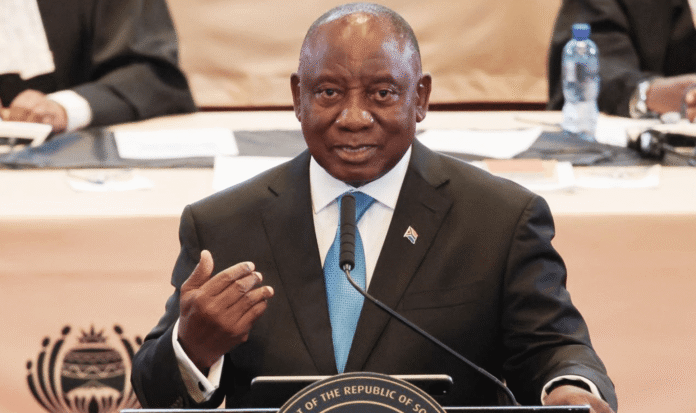
Cape Town — President Cyril Ramaphosa delivered the State of the Nation Address 2026 in Parliament on Thursday evening, outlining the government’s plans to drive economic growth, fight crime and fix failing municipalities.
Speaking before lawmakers in the National Assembly, he declared that South Africa has “turned a corner” after years of stagnation, load shedding and institutional decline.
The State of the Nation Address 2026 set out three core priorities: inclusive growth and job creation, reducing poverty and the cost of living, and building a capable, ethical state.
“We are leaving behind an era of decline and turning towards an era of prosperity and growth,” Ramaphosa said, while acknowledging that unemployment, crime and service delivery failures still weigh heavily on citizens.
In the State of the Nation Address 2026, Ramaphosa highlighted signs of economic stabilisation. South Africa has recorded four consecutive quarters of GDP growth. Inflation has dropped to its lowest level in two decades. The country has posted two primary budget surpluses, and borrowing costs have declined.
Investor confidence has improved. The Johannesburg Stock Exchange has performed strongly over the past year. Operation Vulindlela has accelerated reforms in the energy, rail, and telecommunications sectors.
Load shedding has ended following regulatory changes that unlocked private investment in renewable energy. By 2030, more than 40 per cent of the electricity supply is expected to come from renewable sources. The government has committed over R1 trillion in public infrastructure investment over three years. These funds will support roads, rail, ports, water systems and digital infrastructure.
State of the Nation Address 2026, Crime and Corruption in Focus
The State of the Nation Address 2026 placed strong emphasis on crime. Ramaphosa described organised crime as the most immediate threat to democracy and economic development.
The government will recruit 5,500 additional police officers this year. It will deploy integrated intelligence teams to dismantle criminal syndicates. The President also confirmed stronger oversight of the police following findings from the Madlanga Commission of Inquiry.
To fight corruption, the government will introduce a Whistleblower Protection Bill. It will also reform the procurement system, where most corruption cases originate. “There will be no impunity for acts of corruption and criminality,” Ramaphosa said.
Water shortages featured prominently in the State of the Nation Address 2026. Protests in Gauteng and other provinces have exposed deep weaknesses in municipal infrastructure.
Ramaphosa announced the creation of a National Water Crisis Committee, which he will chair. The government has allocated R156 billion over three years for water and sanitation projects. Municipal managers who fail to deliver services may face criminal charges.
A revised White Paper on Local Government will introduce structural reforms. These changes aim to professionalise appointments, strengthen accountability and improve service delivery.
Unemployment remains one of South Africa’s biggest challenges. The State of the Nation Address 2026 committed to expanding public employment programmes. More than 2.5 million work opportunities have already been created, largely for young people and women.
The government will provide R2.5 billion in funding to support over 180,000 small and medium enterprises this year. Skills development reforms will better align education with labour market needs.
Ramaphosa closed the State of the Nation Address 2026 by invoking the legacy of the women of 1956 and the youth of 1976. He urged South Africans to unite behind reform and growth.
“We have indeed turned a corner,” he said. “Now we must look ahead and move with speed.”
While challenges remain, the President argued that the country now has a clear opportunity to convert stability into sustained, inclusive growth.