


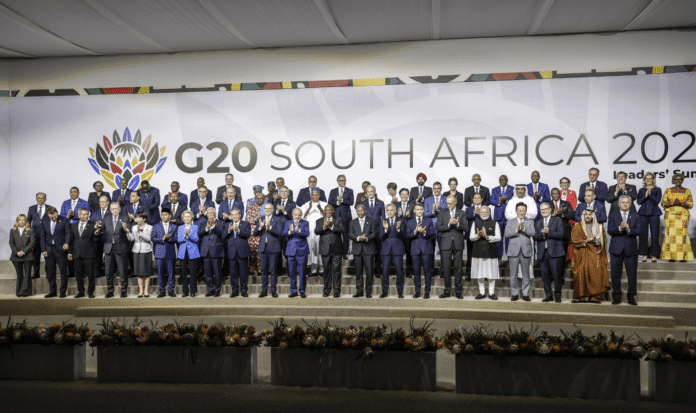
South Africa’s G20 clean cooking energy transition emerged as a defining priority during the country’s G20 presidency from November 2024 to November 2025. The government used the global platform not only to shape international debate but also to push for practical action at home.
The G20 brings together major economies to promote cooperation on growth, development and stability. South Africa aligned this cooperation with everyday social needs, showing how global commitments can support local realities.
One of the most important shifts during South Africa’s presidency was the elevation of clean cooking to a central focus of energy policy. The Department of Energy and Electricity (DEE) led this effort, moving clean cooking from the margins to the core of the energy transition agenda.
This change reflects a broader understanding of energy reform. South Africa recognised that the transition cannot focus only on power stations, grids and renewables. It must also address how households use energy every day.
Cooking remains one of the most energy-intensive household activities across Africa. It also carries serious health risks. Millions of families still rely on firewood, charcoal and coal, especially in rural and peri-urban areas.
Health, Equity and Energy Access at the Centre
During the G20 presidency, South Africa framed clean cooking as a pillar of a just and inclusive energy transition. Leaders treated it as a social and economic issue, not only an environmental one.
Polluting fuels contribute to indoor air pollution, which remains a leading public health risk. Women and children suffer the most exposure. Clean cooking solutions help reduce illness, lower healthcare costs, and improve quality of life.
Clean cooking also supports gender equity. It reduces the time women spend collecting fuel and enables households to reallocate resources to education and income generation.
South Africa moved beyond statements and began early-stage implementation. Through the DEE, clean cooking initiatives reached communities for the first time.
In Mpumalanga, the government distributed LPG starter packs to households. The programme aimed to reduce dependence on coal and wood. Although the rollout remains limited, it demonstrates that G20 commitments can drive real change.
This approach reflects a core G20 principle: global agreements must produce measurable results. South Africa showed that even modest pilots can demonstrate impact when policy aligns with community needs.
Scaling South Africa’s Clean Cooking Energy Transition
Despite progress, clean cooking still requires scale. Small pilots alone will not transform household energy use nationwide.
To sustain momentum, South Africa needs long-term financing, strong public-private partnerships and clear regulation. Clean cooking must form part of the broader energy transition framework, not a standalone project.
Supportive infrastructure, affordable technologies and consistent supply chains will determine success. Without these elements, adoption will remain uneven.
As South Africa moves beyond its G20 term, the South Africa G20 clean cooking energy transition stands out as a people-centred model. It links climate goals with dignity, health and access.
If expanded, clean cooking could become one of the most meaningful legacies of South Africa’s presidency. The transition begins not in policy papers, but in kitchens and homes where energy affects daily life.
South Africa has shown that energy reform works best when it starts with people.