


Nigeria has summoned South Africa’s acting High Commissioner after a fresh wave of anti-foreigner incidents raised concern over the safety of Nigerians and other African nationals living in the country.
This diplomatic move occurs as African countries promote regional integration and open borders. However, South Africa’s resentment toward foreign nationals highlights a contradiction: Africa seeks unity, yet some Africans feel unsafe in other countries.
Against this backdrop, Nigeria’s foreign ministry stated it would formally raise its “profound concern” with South Africa at a meeting in Abuja. The discussions are expected to focus on anti-immigrant demonstrations, reported mistreatment of Nigerian citizens, and attacks on Nigerian-owned businesses.
The question now being asked by many Africans is whether this is xenophobia or something more specific: Afrophobia. While xenophobia refers to hostility towards foreigners generally, Afrophobia describes a particular hostility towards other Africans, especially black Africans from the continent. Critics argue that South Africa’s recurring anti-migrant violence often appears directed at people from Zimbabwe, Nigeria, Mozambique, Lesotho, Ethiopia, Ghana and other African countries.
South Africa’s relatively developed economy has long attracted migrants. People from across the continent travel there for work, business, study, and safety. Some build families, open shops, and contribute to local communities. Others struggle with immigration uncertainty, unemployment, and social suspicion.
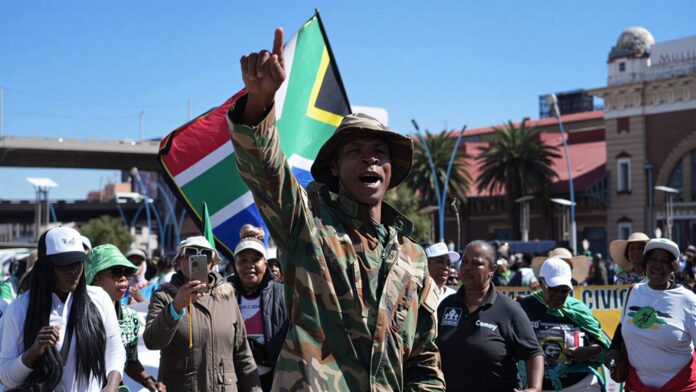
The latest tensions have followed anti-immigration marches in cities including Johannesburg and Pretoria. Some groups have demanded stricter immigration enforcement and mass deportations, while shops closed in some areas because of fears of looting and violence.
Anger is now spilling directly into public spaces. Reports detail anti-migrant groups blocking foreign nationals from urgent access to services, including health facilities, citing severe strain on overwhelmed systems. The iron grip of exclusion is growing.
For many foreigners, the experience is frightening and deeply humiliating. One Nigerian man told BBC Pidgin: “It is not okay because we are blacks, we are brothers… everybody comes here just to survive.”
A security guard who could not go to work because of one protest told the BBC: “It’s not what we expected as fellow Africans.”
His fear captured the emotional weight of the moment. “It’s just making us scared – imagine if we’re scared in our own African continent – what if we go to Europe?” he asked.
South African President Cyril Ramaphosa has condemned attacks on foreign nationals. However, he has also urged foreign nationals to respect South African laws. His message reflects the difficult political terrain in the country, where frustration over unemployment, crime and weak public services is increasingly being directed at migrants.
During his Freedom Day address, Ramaphosa reminded South Africans of the role other African countries played in supporting the struggle against apartheid. That history remains important. Nigeria, Zambia, Tanzania, Zimbabwe, Mozambique and many others gave political, diplomatic and material support to South Africa’s liberation movements during apartheid.
That is why the current tension cuts so deeply. For many Africans, the hostility towards migrants is not only a domestic South African issue. It is a continental wound. It challenges the very idea of African solidarity at a time when institutions such as the African Union and the African Continental Free Trade Area are pushing for closer cooperation.
Ghana has also raised concerns. Its foreign affairs minister summoned South Africa’s envoy in April after videos circulated showing incidents involving Ghanaian nationals. South African authorities later promised action against those involved in xenophobic attacks against Ghanaians and other foreign nationals.
These violent incidents revive memories of previous outbreaks of anti-foreigner attacks in South Africa, including episodes in 2008, 2015, and 2019. Each time, the country faced criticism from other African governments and migrant communities, leading to calls for stronger protection, better policing, and more responsible political language.
The root issue persists: South Africa faces unemployment, inequality, weak services and public frustration. Anti-immigration groups blame undocumented migrants, while campaigners argue foreigners are scapegoats for long-standing structural failures. Reuters reported these perspectives after recent incidents.
While immigration systems require order and every country has the right to regulate its borders, document migrants, and enforce laws, it is vital to distinguish lawful immigration enforcement from harassment, intimidation, mob action, or violence.
This distinction is crucial. Civilians demanding identity papers outside hospitals and schools undermines the rule of law. Business closures due to fear hurt livelihoods. If African migrants feel unsafe, defending continental unity becomes much harder.
This is why the language matters. Calling the violence xenophobia may be accurate in a general sense. Calling it Afrophobia may force a more uncomfortable conversation about why black African migrants often carry the heaviest burden of public anger.
South Africa stands at a critical crossroads. The government must urgently enforce immigration laws without letting vigilante groups seize control of public spaces. It must protect citizens without demonising migrants, and address legitimate frustrations without turning African nationals into scapegoats.
Nigeria’s decision to summon South Africa’s acting High Commissioner underscores that tension has moved beyond street-level incidents. It is now escalating into a diplomatic matter, with potential to strain one of Africa’s most important bilateral relationships.
Africa cannot embrace integration while humiliating Africans at borders. Trade cannot flourish if people fear crossing regions. Open markets fail when communities close themselves off.
Whether termed xenophobia or Afrophobia, the risk remains: unresolved tensions may undermine continental unity. South Africa’s issue involves not just immigration, but law, leadership, memory, solidarity, and the future of African belonging.