


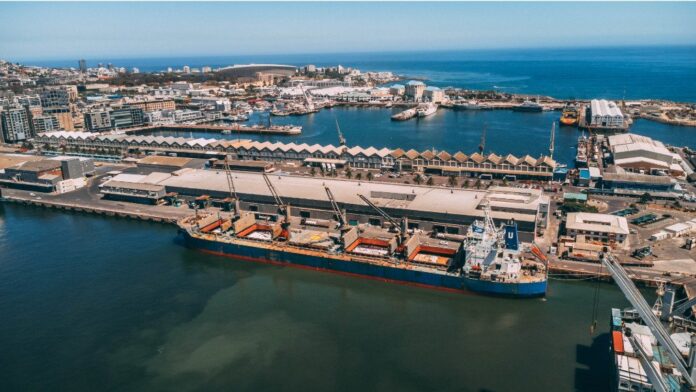
South Africa’s drive to overhaul its freight network is attracting interest from Saudi Arabia, with Red Sea Gateway Terminal considering a 25-year concession at the Port of Cape Town.
The Saudi port operator is assessing the opportunity to refurbish and run the multipurpose terminal at Duncan Dock, as Transnet National Ports Authority (TNPA) brings private capital and expertise into parts of the country’s port system.
RSGT attended a prospective bidders’ briefing in Cape Town on 6 August. The company is evaluating whether to enter the tender, but has not yet secured the concession.
TNPA is seeking a new operator ahead of the current terminal lease expiring in 2027. The successful bidder would finance improvements, operate and maintain the facility, and develop additional infrastructure where required. Bids are due to close in November.
Duncan Dock handles containerised, dry-bulk and break-bulk cargo, making its performance important to businesses moving goods through Cape Town. The terminal covers about 120,000 square metres and forms part of a port serving key agricultural, manufacturing and trade routes.
The proposed concession comes as South Africa attempts to repair weaknesses in a logistics system that has weighed heavily on exporters and economic growth.
Mining companies, manufacturers and agricultural producers depend on efficient railways and ports to reach international markets. Delays increase costs, disrupt supply chains and weaken South African products against competitors operating through more efficient trade corridors.
Cape Town has faced particular pressure. Congestion, equipment constraints and weather disruptions have affected operations in recent years, prompting Transnet to introduce new technology and operational measures aimed at improving cargo movement.
Private participation has now become an increasingly important part of the reform programme.
Rather than selling strategic port assets, South Africa is opening selected operations to private companies under long-term concessions. Government retains ownership of the infrastructure while operators bring capital, equipment and technical expertise.
That distinction will matter as the country balances the need for investment with questions over control of critical national infrastructure.
RSGT’s interest also highlights a wider shift in African infrastructure investment. Gulf investors are becoming increasingly visible across the continent’s ports, logistics corridors, energy projects and transport infrastructure. Africa’s growing trade volumes and infrastructure deficit have created opportunities for companies capable of financing large, long-term projects.
Saudi Arabia has been expanding its commercial engagement with Africa as it looks beyond traditional energy investments. Transport and logistics provide a natural extension because ports sit at the centre of trade between Africa, the Middle East, Asia and Europe.
Cape Town’s geographic position adds to that appeal. Shipping disruptions affecting other global routes have renewed attention on the Cape of Good Hope as an important maritime passage. An efficient South African port network could benefit from that strategic position while supporting domestic exports.
Yet attracting international capital alone will not solve South Africa’s logistics problems.
Success will depend on whether private investment produces measurable improvements in turnaround times, cargo capacity and reliability. Businesses need ports that can move goods predictably, rather than infrastructure projects that deliver investment without operational gains.
South Africa has already begun testing that model elsewhere in its port network as Transnet seeks private participation in terminal operations and infrastructure development.
Cape Town could become another important test.
A successful Duncan Dock concession could strengthen cargo capacity and demonstrate that South Africa can attract international infrastructure operators while retaining public ownership of strategic assets.
It could also encourage further investment across the country’s freight network, where billions of rand will be needed to modernise ageing infrastructure and restore competitiveness.
RSGT remains only a potential bidder, and other international operators are also assessing the opportunity. The final outcome will depend on the competitive tender process. Still, the interest from Saudi Arabia sends an important signal.
South Africa’s logistics crisis has long been viewed as a constraint on growth. Increasingly, it is also being viewed by global investors as an infrastructure opportunity.
The real measure of the reform will not be who wins the concession, but whether Cape Town can move more African goods to global markets faster, more reliably and at a competitive cost.