


Foreign investors are continuing to place billions of dollars across Africa, but the flow of capital is becoming increasingly concentrated in countries and industries positioned around energy, critical minerals, infrastructure, technology and manufacturing.
Africa attracted about $70 billion in foreign direct investment in 2025, according to the latest World Investment Report from UN Trade and Development. Although that represented a decline from the unusually high level recorded a year earlier, investment remained roughly one-third above the continent’s long-term average and reached its third-highest level since 1990.
Behind the headline figure is a changing investment landscape. Global capital is becoming more selective, with investors increasingly targeting economies that combine strategic resources, large consumer markets, infrastructure opportunities and policies capable of supporting major projects.
Egypt remained Africa’s largest recipient of foreign direct investment in 2025, attracting about $15 billion. Its position reflects continued investor interest across infrastructure, energy, logistics, manufacturing and technology, alongside the country’s strategic location connecting Africa, the Middle East and global shipping routes.
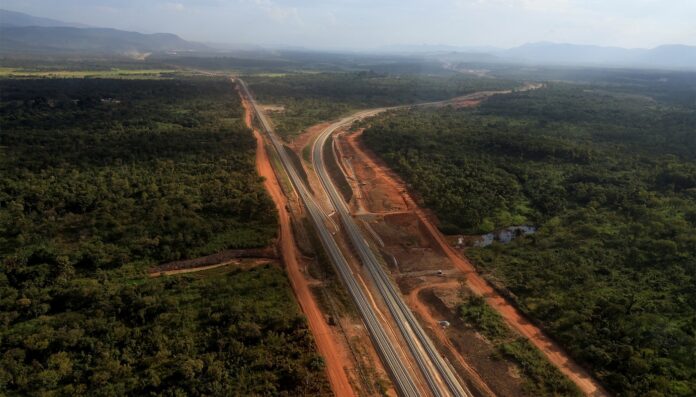
Guinea recorded one of the continent’s most significant increases as investment linked to the vast Simandou iron ore development accelerated. Railways, ports and mining infrastructure associated with the project have turned the West African country into an important destination for capital tied to global demand for high-grade iron ore.
Mozambique also attracted substantial investment as activity around its liquefied natural gas industry regained momentum. Large energy projects have placed the country among Africa’s leading destinations for international capital, although security risks in Cabo Delgado remain an important consideration for investors.
Nigeria returned strongly to the investment conversation, with foreign direct investment rising sharply to about $4 billion in 2025. UNCTAD data shows inflows increased by 148%, placing Africa’s most populous country back among the continent’s five largest FDI destinations.
Nigeria’s recovery comes after years in which foreign investors faced currency shortages, regulatory uncertainty and concerns over the wider business environment. Recent economic reforms, a large consumer market and opportunities across energy, financial services, manufacturing and infrastructure are helping restore investor interest.
Ethiopia remains another major destination despite its recent political and economic challenges. Telecommunications, manufacturing, industrial parks and infrastructure continue to attract international capital as the country gradually opens sectors that were historically dominated by the state.
Morocco’s position has strengthened considerably as it builds industries around electric vehicles, batteries, renewable energy and advanced manufacturing. Investment in the country rose strongly in 2025, reinforcing its emergence as one of Africa’s most diversified industrial destinations.
Projects such as Gotion High-Tech’s battery development in the Rabat-Salé-Kénitra region illustrate that transition. Morocco is using its proximity to Europe, trade agreements and established automotive industry to position itself within global electric-mobility supply chains.
Kenya is attracting a different mix of investment, with technology and digital infrastructure increasingly complementing traditional sectors such as financial services, manufacturing and renewable energy. Its established technology ecosystem and relatively developed capital markets have strengthened Nairobi’s role as an East African business hub.
Growing demand for artificial intelligence infrastructure could add another layer to that investment story. Data centres require significant electricity and digital connectivity, giving countries with reliable renewable energy an opportunity to compete for technology-related capital.
Uganda, Côte d’Ivoire and Ghana also remain important investment destinations, supported by combinations of energy, mining, infrastructure, agriculture and consumer-market opportunities.
Taken together, these investments reveal a broader change in what global capital increasingly seeks from Africa. Natural resources remain important, but investors are also looking at the infrastructure and industries required to process, transport and transform those resources.
Critical minerals have become particularly significant as governments and companies compete to secure supplies for electric vehicles, renewable energy systems and advanced technologies.
Africa holds substantial reserves of cobalt, copper, lithium, manganese, graphite and other minerals needed for the global energy transition. That geological advantage is attracting growing attention from China, Europe, the United States, Gulf states and other international investors.
Energy is another major destination for capital. Oil and gas continue to attract substantial investment, particularly in countries such as Mozambique, Uganda and Nigeria, while renewable energy projects are expanding across the continent.
Solar, wind, hydropower, green hydrogen and battery storage are creating investment opportunities as African governments seek to expand electricity supply while responding to the global transition towards lower-carbon energy.
Infrastructure connects many of these investment themes. Mines require railways and ports, manufacturers need reliable electricity, technology businesses depend on digital networks, while regional trade requires efficient roads and border crossings. Countries able to combine those elements are becoming increasingly attractive to investors.
Global competition for African opportunities is also changing. European investors remain important, while China continues to hold a substantial position across infrastructure, mining and manufacturing. Gulf investors are becoming increasingly prominent in energy, logistics, real estate and major infrastructure projects.
Growing participation from the United Arab Emirates, Saudi Arabia and other Gulf economies is broadening Africa’s investment relationships beyond its traditional partners.
That diversification could give African governments greater negotiating power, particularly when several investors compete for access to the same resources or markets. Competition alone, however, does not guarantee that foreign investment will deliver broader economic development. Africa’s bigger challenge lies in what happens after capital arrives.
A billion-dollar mining project can increase foreign investment figures without necessarily creating a large domestic industrial ecosystem. Similar concerns apply to infrastructure and energy projects when equipment, expertise and profits largely flow outside the host economy.
UNCTAD has highlighted this distinction, arguing that the development impact of foreign investment depends on whether it builds productive capacity, creates jobs and develops skills and technology. That makes the quality of investment as important as the quantity.
Manufacturing projects can generate supplier networks and technical employment when businesses source more goods and services locally. Infrastructure can lower costs across entire economies when it connects businesses to markets, while technology investment can develop skills when local workers participate meaningfully in new industries.
Mineral-rich countries face an especially important choice. Exporting raw resources can generate foreign exchange quickly, but processing them locally creates opportunities to capture more value before they leave the continent. Several African governments are therefore pushing investors towards beneficiation and domestic manufacturing.
Morocco’s battery industry represents one model, where investment increasingly connects raw materials, manufacturing and export markets. Similar ambitions are emerging elsewhere as governments seek a larger role in global electric-vehicle and clean-energy supply chains.
Nigeria is pursuing comparable objectives across agriculture, energy and manufacturing, while the Democratic Republic of the Congo is tightening policies around mineral processing to retain more value from its copper and cobalt resources.
Foreign investment could accelerate those ambitions when capital brings technology, infrastructure and access to international markets. Poorly structured deals could instead reinforce the traditional model of extracting resources while creating limited economic activity beyond the project itself.
Another warning sign appears in greenfield investment data. Although Africa continued attracting significant FDI in 2025, the value of announced greenfield projects fell by almost one-third. Interestingly, the number of projects increased, suggesting investors remain interested in Africa but are committing capital through a larger number of smaller investments.
Such a pattern reflects a global environment shaped by geopolitical tensions, trade uncertainty and high financing costs. Investors are still searching for growth, but many are becoming more cautious about committing enormous amounts of capital to individual projects.
Africa must therefore compete not only with other developing regions but also within itself. Countries offering predictable regulation, reliable infrastructure, stable electricity and efficient government processes are likely to hold an advantage. Large markets and natural resources can attract attention, but investors also consider whether projects can operate competitively over many years.
AfCFTA could strengthen Africa’s proposition by allowing investors to think beyond individual national markets. A manufacturer establishing operations in one country could eventually gain easier access to consumers across much of the continent if regional trade barriers continue to fall.
That possibility changes the investment equation, particularly for smaller African economies that cannot compete with Nigeria, Egypt or Ethiopia on domestic market size alone.
Regional manufacturing hubs could serve several countries, while transport corridors and integrated energy systems could make cross-border investment more commercially attractive.
Africa’s $70 billion in foreign investment therefore tells only part of the story. Capital is arriving, but it remains concentrated in a relatively small number of countries and strategic industries.
Success will depend on whether governments can turn those investments into productive economies rather than simply higher FDI statistics.
Energy projects need to power industries. Mineral investments need to create processing and manufacturing opportunities. Technology capital needs to develop African skills, while infrastructure must connect businesses and communities to markets.
Global investors are already identifying where they see Africa’s next opportunities. The more important question is whether African economies can ensure that the capital flowing into the continent creates value that remains long after the investment announcements have passed.