


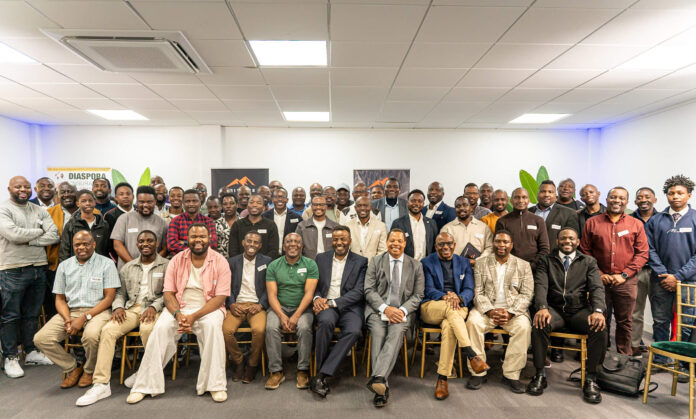
Thrive Men is building a necessary space for African men in the United Kingdom to connect, speak openly, share knowledge and build with purpose. This vision came to life at the Intergenerational Business Forum, themed “Making It in the UK,” hosted at Diaspora Insurance House in Birmingham, United Kingdom, and supported by Diaspora Insurance.
The forum brought together more than 60 African men, mainly from the Zimbabwean community, for a practical conversation on business, wealth creation, identity and legacy. Founded to respond to the realities many African men face in the diaspora, Thrive Men recognises that success is not only about income. It is also about mental well-being, family, leadership, relationships and the ability to build something that lasts.
For many African men, life in the UK begins with sacrifice. They arrive with ambition, responsibility and the hope of creating a better future. At the same time, many are supporting families across continents, adapting to new systems and carrying expectations that are rarely discussed openly.
This is what made the forum important. It challenged the assumption that men do not show up for serious conversations. They did. Across generations, men came ready to listen, learn, ask questions and engage with the realities of building a meaningful life in the diaspora.
The gathering brought together established professionals, entrepreneurs, recent arrivals and young men under 30. This intergenerational mix gave the event its strength. Older men shared lessons from experience, while younger men brought questions, ambition and fresh perspectives. It became clear that African men cannot build in isolation. Collaboration is essential for survival, progress and generational impact.
For African men in the diaspora, success is often tied to family and community. Financial decisions are shaped by school fees, medical bills, property plans, business dreams, family obligations and the desire to remain connected to home. This is why conversations about wealth must go beyond salaries. They must include investment, protection, planning and how money can support families both in the UK and in Africa.
The experienced track offered practical insights from men who have built across different sectors. Jeff Madzingo shared the story behind Diaspora Insurance, showing how a business can grow from identifying a real community need and building trusted solutions for Africans abroad.
Andrew Nyamayaro spoke about legal and immigration challenges, reminding participants that ambition must be supported by information. Many people arrive in the UK with drive and potential, but without the right guidance, unfamiliar systems can delay or limit progress.
Muchada Bvunzawabaya reflected on his entrepreneurial journey, highlighting the discipline, setbacks and persistence required to build a business. His contribution was a reminder that success is not instant or effortless. It is built through sacrifice, learning, failure and consistency.
Fence Africa 24 spoke to one of the organisers, who spoke about the realities of managing projects across two countries. His reflections resonated with many participants because diaspora life often stretches between the UK and Africa. The UK may offer structure and access, while African markets offer opportunity and connection. The challenge is learning to build in both spaces with clarity, accountability and strategy.
Dr Paradzai Chitongo brought the conversation back to the topic of legacy. He encouraged men to think beyond short-term survival and ask deeper questions: What are we building for our children? What values are we passing on? What systems will remain after us? His message placed legacy at the centre of business, family and leadership.
The youth track was equally important. Young African men in the UK face pressures around identity, belonging, relationships, social media, money, mental health and purpose. These challenges require honest conversation, not silence.
Nelson Tanyanyiwa led a discussion on identity, purpose and direction. Muzzie Nduna spoke about financial awareness, mindset and decision-making. Tino Bvunzawabaya addressed mental health and addictions, creating room for open conversation about stress, coping and support. A panel on relationships and social media explored how digital culture shapes self-worth, expectations and connection among young people.
One of the strongest features of the forum was that younger men were not treated as observers. They were part of the conversation. Older men were also given space to listen, not only to advise. This exchange showed that mentorship does not always need a formal structure. Sometimes it begins when men are honest enough to share what they have lived, learned and overcome.
Although the gathering was strongly rooted in the Zimbabwean community, participation from Ghana and Cameroon broadened its African character. The issues discussed were not limited to one nationality. Across the African diaspora, many communities are asking similar questions: How do we build wealth without losing identity? How do we support home without burning out abroad? How do we collaborate across borders? How do we ensure individual success contributes to collective progress?
This is where platforms such as Thrive Men become essential. The African diaspora holds significant talent, knowledge and economic power, but too much of it remains scattered. When professionals, entrepreneurs and young people build together, they create more than networks. They create ecosystems of support, opportunity and accountability.
The Intergenerational Business Forum was not just another event. It was a starting point for deeper collaboration, mentorship, investment conversations and practical brotherhood. It showed what is possible when African men come together with honesty and intention.
Thrive Men will continue this work through its annual men’s gathering from 14 to 16 August 2026, with a greater focus on wellness, family, relationships and the holistic success of Black men in the UK. This next gathering is timely because economic progress cannot be separated from emotional health, strong families and supportive relationships.
Speaking to Fence Africa 24, one of the event organisers, Kudzai Midzi, said, “The success of the event debunks two common myths, that men don’t come together and that men don’t open up. What we saw was the opposite: men showing up, engaging honestly, and learning from one another across generations. Thrive has been building this community over the past two years, and this forum marks an important next step, creating a space where men are not just getting by, but truly thriving.”
The forum confirmed a powerful truth: the African diaspora is not a scattered community without direction. It is a global force. With vision, organisation and connection, it can build wealth, strengthen families, support communities and create a legacy across continents.