


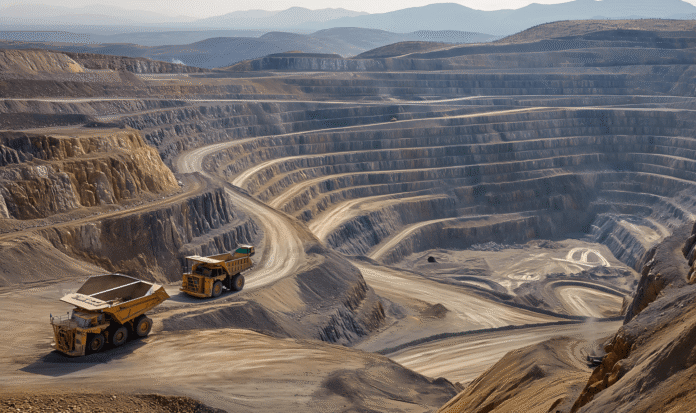
The Democratic Republic of Congo is set to begin its first lithium production at Manono in 2026. Zijin Mining and state miner Cominiere are leading the project. Beyond its scale, Manono represents a deliberate shift in how Africa structures mineral deals, with greater emphasis on local processing, state participation, and the retention of battery-related value on the continent.
At full capacity, Manono Northeast will produce approximately 130,000 tonnes of lithium carbonate equivalent per year, placing it among the world’s leading hard-rock lithium projects. Zijin plans to process spodumene concentrate into crude lithium sulphate within Congo itself. That means value is added on Congolese soil before any export takes place.
Africa has long exported minerals in raw or semi-processed form, with higher-value activities taking place elsewhere. Manono aims to change that dynamic. Congo continues to attract foreign investment and expertise, but the project places greater weight on domestic processing and value creation.
Lithium has become one of the most contested minerals in the global economy. Batteries power electric vehicles, store renewable energy, and underpin the shift away from fossil fuels. Countries that control supply, refining, and intermediate processing gain significant influence in industries that will define manufacturing for decades to come.
Manono carries weight for both Congo and Africa. Exporting concentrate alone would be commercially significant. Yet local conversion to lithium sulphate moves the value chain one step further into the continent. It falls short of a full battery industry, but it represents a more substantial form of beneficiation than Africa has typically secured in previous resource cycles.
State participation is central to the deal. Cominiere gives Congo a direct equity stake in the venture, not merely the role of tax collector or licensing authority. That equity position strengthens the government’s claim on returns and gives it direct oversight of how value is created.
This deal structure is gaining political traction across Africa. Governments face growing pressure to ensure critical minerals deliver more than raw export revenues. Manono exemplifies that shift and forms part of a broader continental effort to capture greater value from the battery economy.
The project is advancing amid intensifying geopolitical competition. The United States, Europe, and China are all working to diversify supply chains and secure materials for electric vehicles and renewable energy. Central Africa sits at the heart of that contest. Recent U.S.-DRC engagement on critical minerals underlines how quickly the competition is moving.
Wider strategic pressure makes local beneficiation more important for Africa. Remaining only a source of ore and concentrate limits Africa’s position in the value chain. Expanding domestic processing and intermediate chemical production strengthens Africa’s role in related industries. This shift helps Africa participate in the transition, rather than being supplied on someone else’s terms.
The project carries a contentious history. AVZ Minerals, an Australian company, lost part of the deposit following prolonged legal battles. Congo reassigned the area to the Zijin-Cominiere venture. Unresolved tensions remain. Manono is not only a major commercial project but also a politically sensitive one.
Harder industrial questions remain. A lithium sulphate plant is a start, not a destination. Long-term value depends on more than one facility. Manono must connect to reliable power, efficient logistics, skilled labour, and a broader processing ecosystem. Each element will require sustained investment and time. Without them, the project risks becoming another mineral extraction story with limited domestic benefit.
Manono warrants close attention. It could become a leading global lithium source. More importantly, it reflects a growing African determination to avoid repeating the extractive patterns of the past, this time, in the battery era.