


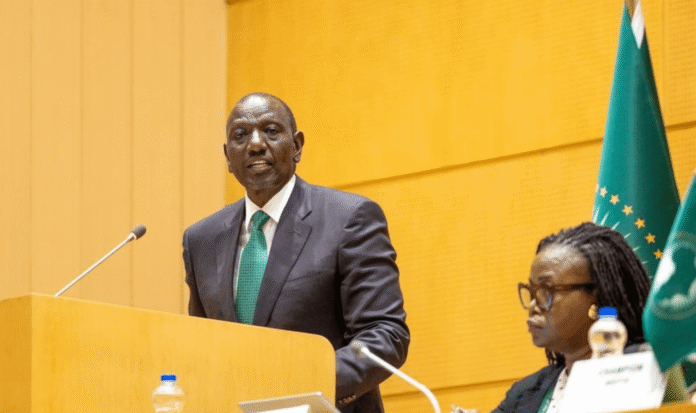
African leaders gathering in Addis Ababa have urged faster AfCFTA implementation, warning that the continent cannot afford further delays in turning the trade pact into measurable economic gains.
The call came during the 39th Ordinary Session of the African Union in Addis Ababa. Heads of state met between 12 and 15 February to review progress and set priorities.
Kenya’s President William Ruto chaired the inaugural Committee of Heads of State on implementing the African Continental Free Trade Area (AfCFTA). He made one message clear: Africa must move from promise to practice.
President Ruto told delegates that AfCFTA implementation must now shift into high gear. He said the agreement offers a path to industrial growth, stronger value chains and continent-wide competitiveness.
“The AfCFTA must move decisively from negotiation to implementation,” he said. “Its benefits will only come through disciplined execution and sustained political leadership.”
Economic forecasts show the scale of the opportunity. Analysts estimate the agreement could significantly boost intra-African trade and raise cumulative GDP over the next two decades. But leaders stressed that projections alone will not transform economies.
What Leaders Agreed in Addis Ababa
Summit discussions focused on practical steps rather than new declarations.
Leaders reviewed progress under the Guided Trade Initiative. This mechanism allows selected countries to trade specific goods under AfCFTA rules. More states plan to expand participation in the coming months.
They also discussed strengthening the AfCFTA Adjustment Fund. The fund supports countries that may lose short-term tariff revenue as trade barriers fall. Officials see it as vital for maintaining political momentum.
Customs reform featured heavily. Leaders called for the faster rollout of digital certificates of origin and harmonised border systems. Long delays at ports and crossings still slow continental trade.
Industrial coordination also received attention. Pharmaceutical production, automotive assembly and agro-processing emerged as priority sectors. Leaders want countries to align national policies with continental value chains.
Global economic shifts have sharpened the urgency around AfCFTA implementation. Supply chain disruptions and rising protectionism have exposed Africa’s vulnerability to external shocks.
Africa trades more with external partners than with its own. Intra-African trade remains relatively low compared to other regions. Leaders argued that strengthening internal markets will improve resilience.
Yet significant barriers remain. Infrastructure gaps, regulatory inconsistencies and limited trade finance continue to restrict cross-border commerce. Several officials acknowledged that implementation gaps now pose the biggest obstacle.
AfCFTA is the world’s largest free trade area by the number of participating countries. But its credibility depends on results at border posts, factories and logistics hubs.
President Ruto’s intervention reflected a broader mood in Addis Ababa. Leaders want AfCFTA implementation measured in shipments, factories and jobs, not in summit communiqués.
The coming months will test whether political commitment can translate into coordinated action on the ground.