


On Tuesday, Safaricom launched Ziidi Trader, a new service that allows M-PESA users to buy and sell shares listed on the Nairobi Securities Exchange (NSE).
The service addresses a long-standing gap in Kenya’s capital markets. Stockbrokers and investment banks have struggled to bring large numbers of retail investors into equities.
Ziidi Trader allows users to trade shares in the same way they send money or pay for utilities. For millions of Kenyans, this represents a major shift in how they can access the stock market.
Safaricom says the platform builds on the trust users already place in M-PESA.
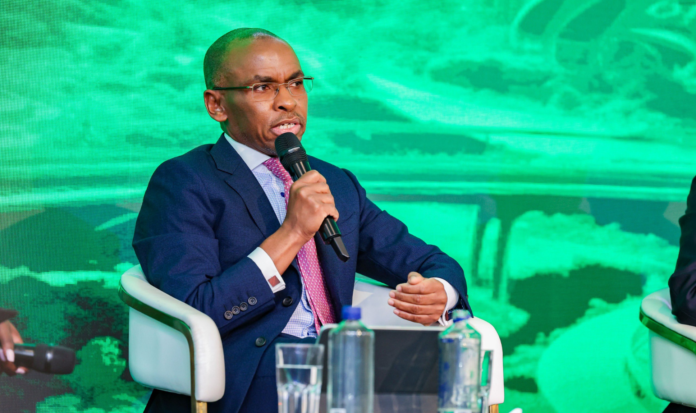
“Ziidi Trader is a powerful step in democratising wealth for our customers,” said Peter Ndegwa, Safaricom’s chief executive, at the launch.
“For eighteen years, M-PESA has transformed how Kenyans live, work and do business. Today, in partnership with the NSE, we are extending that impact to how our customers build and grow their wealth.”
With Ziidi Trader, users do not need a separate app or login. As long as they have an M-PESA account, the service appears as an option in the app menu.
Safaricom has integrated onboarding, trading, price tracking and settlement into one flow. Users see live prices, choose how much to invest and confirm trades. The app then debits or credits the M-PESA wallet instantly.
Until recently, buying shares on the NSE involved a complex process. Investors in cities such as Nairobi, Mombasa and Kisumu had to work through licensed stockbrokers. Some banks, including KCB Group and Diamond Trust Bank (DTB), also offer brokerage services.
First, investors needed a Central Depository System (CDS) account. Brokers opened the account on their behalf. Investors then completed multiple forms, underwent Know Your Customer checks and linked bank accounts before trading.
This remains the standard process across most African markets. In Kenya, however, it became a barrier after the rapid adoption of digital payments.
Ziidi Trader removes the need for a personal CDS account. Instead, trades from many users are pooled into an account managed by Safaricom in partnership with licensed brokers such as Kestrel Capital. The broker holds the shares, while Ziidi Trader maintains an internal ledger showing each user’s holdings.
This model is common among fintech trading platforms globally. However, it differs from traditional ownership, where shares are registered directly in an investor’s name.
The structure may limit voting rights. In rare cases, protections could also differ if a broker faces financial trouble. For most users, these risks remain theoretical, but they form part of the trade-off for simplicity.
Ziidi Trader lowers access barriers, but it does not remove investment risk. Users are asked to verify basic information, such as occupation and source of funds, and to acknowledge that markets fluctuate.
Safaricom and regulators include risk disclosures during onboarding to address these concerns.
Retail participation on the NSE has remained low for years. Ziidi Trader could change that by lowering barriers and attracting millions of new investors. If adoption grows, the platform may reshape how Kenyans engage with equities.
The launch signals a broader shift in Kenya’s financial system. Trading on the NSE no longer belongs only to institutions and wealthy individuals. Instead, it is moving closer to everyday users, marking a step toward wider participation and the democratisation of capital markets.