


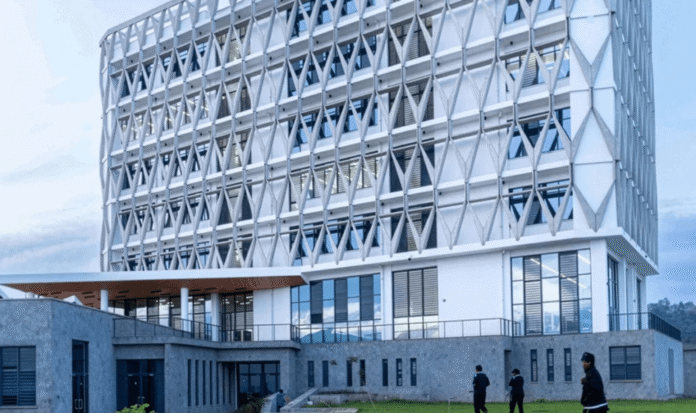
The Rwanda biomedical engineering and e-health project has received a major boost after the African Development Bank Group approved $29.85 million to support the second phase of the country’s Centre of Excellence for Biomedical Engineering and e-Health.
The funding supports a $33.64 million programme to strengthen healthcare delivery, build future-ready skills, and position Rwanda as a regional leader in digital health innovation.
The African Development Bank Group will contribute $24.64 million through the African Development Fund and $5.21 million from its own resources. Meanwhile, the Government of Rwanda will cover the remaining balance.
Rwanda biomedical engineering and e-health project expands capacity
The Rwanda biomedical engineering and e-health project operates from Kigali Innovation City, a rapidly growing centre for technology, education, and research.
In this second phase, the programme will expand and modernise the Centre of Excellence. Specifically, it will introduce new academic programmes, upgrade laboratories, install advanced equipment, and deepen collaboration with private-sector partners.
Moreover, the project builds on the achievements of Phase I. It also aligns with Rwanda’s long-term strategy to link education, innovation, and healthcare delivery.
Once complete, the centre will train specialists who can support hospitals, clinics, and health technology firms across Rwanda and the wider East African region.
Skills development sits at the heart of the Rwanda biomedical engineering and e-health project.
Phase II will train 470 students in biomedical engineering, rehabilitation and mobility sciences, and digital health. The programme will offer training at both undergraduate and postgraduate levels.
Importantly, most beneficiaries will come from Rwanda and other East African Community member states. As a result, the project will strengthen regional integration and shared technical expertise.
In addition, the programme will invest in academic staff development at the University of Rwanda. This includes support for PhD and postdoctoral training to safeguard the long-term quality of teaching and research.
Biomedical Innovation Park to Drive Local Solutions
A key component of Phase II is the creation of a Biomedical Innovation Park. The park will connect students, researchers, and private companies. Through this collaboration, participants will design, test, and manufacture medical devices and digital health tools tailored to local and regional needs.
As a result, Rwanda expects to reduce reliance on imported technologies. The initiative should also lower maintenance costs and improve access to essential medical equipment.
By linking education with entrepreneurship, the Rwanda biomedical engineering and e-health project aims to support health-tech start-ups and attract new research funding.
Rwanda biomedical engineering and e-health project expands capacity
Beyond education, the project will deliver tangible improvements to Rwanda’s healthcare system.
Hospitals and clinics will gain access to locally trained professionals who can install, maintain, and repair medical equipment. Consequently, facilities should experience fewer delays and better patient outcomes.
At the same time, digital health tools and telemedicine solutions will expand access to care. This is especially important for rural and underserved communities. Over time, these interventions should improve diagnosis, treatment safety, and system resilience nationwide.
During construction, the project will create hundreds of short-term jobs, mainly for young people. In the longer term, it will stimulate innovation-led growth by supporting skilled employment and new health-technology businesses.
“This project will equip our young people with world-class skills while bringing better health services closer to families,” said Hendrina Doroba, Manager for Education and Skills Development at the African Development Bank Group.
Approved on 9 January, the project will run until 2030. The Government of Rwanda will implement it through the University of Rwanda, in line with the country’s ambition to build a knowledge-driven economy and a resilient, inclusive health system.