


Since withdrawing from the Economic Community of West African States, Mali, Niger and Burkina Faso have moved quickly to build new shared institutions, inaugurating a regional bank, launching a joint television channel and establishing a combined military force under the banner of the Alliance of Sahel States.
The three post-coup countries say these steps mark a decisive shift towards self-reliance and regional cooperation, after years of frustration with systems they argue did not reflect their political realities or development priorities. Rather than operating separately, the governments have chosen to pool resources and act together, presenting the alliance as a practical response to long-standing security and economic challenges in the Sahel.
The new regional bank is intended to support development projects, infrastructure and trade across Mali, Niger and Burkina Faso. Officials say it will help reduce dependence on external lenders and give the three states greater control over financing decisions that affect their economies. While the institution is still in its early stages, it has been presented as a foundation for long-term economic cooperation.
Alongside this, the alliance has launched a joint television station to strengthen regional communication and counter what leaders describe as years of negative or distorted portrayals of the Sahel. The channel is expected to broadcast in multiple languages and focus on regional affairs, development and shared cultural identity, offering a platform that reflects local perspectives.
Security remains a central concern for all three countries, and the creation of a joint military force has been described as one of the most important outcomes of the alliance so far. The force is designed to coordinate operations, share intelligence and improve responses to armed groups operating across borders. Leaders argue that regional threats require regional solutions and that cooperation will improve both effectiveness and accountability.
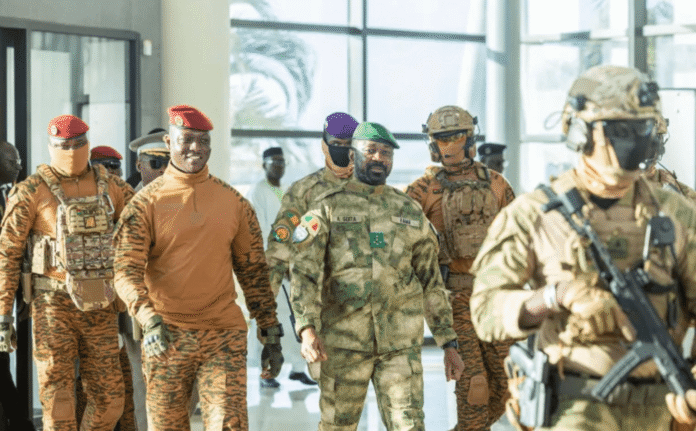
These developments were highlighted in Bamako on 23 December 2025, when Burkina Faso’s President, Captain Ibrahim Traoré, walked alongside Mali’s President, General Assimi Goïta, during the alliance’s second summit. The image was widely shared as a symbol of unity and shared direction.
Supporters of the alliance say the pace of institution-building shows a clear intent to replace what was left behind with functional alternatives rather than political slogans. They point to growing public approval, particularly among young people, who see regional cooperation as a path towards stability, jobs and dignity.
The long-term success of the project will depend on delivery, funding and sustained cooperation. However, the early steps taken since leaving ECOWAS suggest that Mali, Niger and Burkina Faso are not retreating from regional engagement, but reshaping it on their own terms.