


The conflict involving Iran disrupts key energy routes and raises fuel prices. This prompts governments, businesses, and households to reconsider their reliance on volatile oil markets. Interest in electric vehicles grows, but widespread adoption remains slow. High costs, limited charging infrastructure, and consumer hesitation all contribute to this slow pace.
Each fuel price spike exposes a vulnerability. Petrol and diesel vehicles depend on fragile supply chains that distant conflicts can easily disrupt. Higher oil prices raise transport costs, fuel inflation, and strain household budgets. Thus, governments and businesses increasingly view electric mobility as an energy security solution, not just a climate initiative.
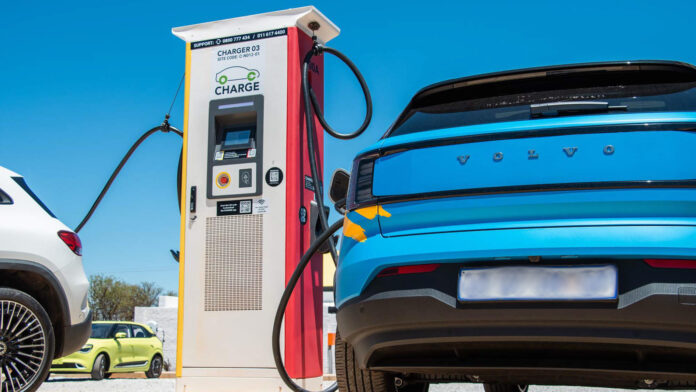
Ethiopia launched a new ultra-fast public charging centre in Addis Ababa as part of its broader effort to expand electric mobility. The government will deploy thousands of charging stations and promote electric transport to reduce fuel dependence and advance green growth. Importantly, Ethiopia prioritises immediate infrastructure development rather than treating electrification as a long-term goal.
Uganda is contributing to this momentum from a unique perspective. Kiira Motors has signed a key agreement to supply 450 electric buses and charging infrastructure to South Africa’s Golden Arrow Bus Services. This shows African manufacturers trading electric mobility solutions across the continent.
These developments show that Africa’s electric vehicle transition goes beyond private car ownership. It covers public transport, industrial policy, local manufacturing, and new infrastructure. This broad shift may have a greater long-term impact than short-term consumer demand.
The current fuel shock may not immediately boost EV sales, but it is shifting the conversation. People now discuss electric vehicles in terms of cost, resilience, and control, not just climate concerns. Countries that invest in charging infrastructure, support local production, and reduce fuel imports will position themselves better during future oil market disruptions.
The conflict is reminding the world, again, that transport built around fossil fuels carries risks that go far beyond the pump. Africa, in places like Ethiopia and Uganda, is already beginning to respond.