


Ethiopia electric transport transition is accelerating as the country pushes ahead with plans to electrify its transport system as part of a broader strategy to build a greener economy and reduce dependence on imported fuel.
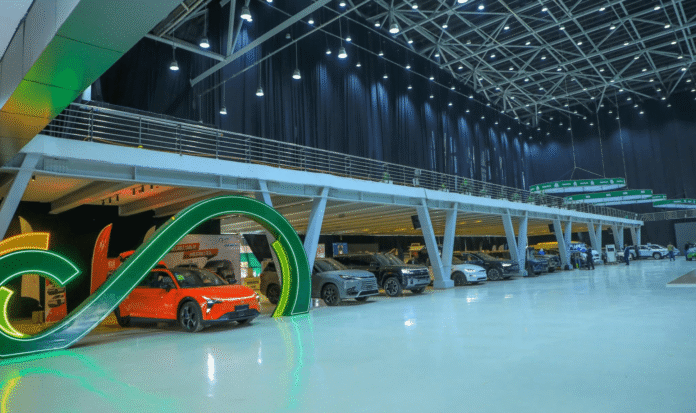
At the Green Mobility Exhibition and Forum 2025, held in Addis Ababa from 27–31 December, government officials and business leaders outlined how electric vehicles and renewable energy are becoming central to Ethiopia’s long-term development plans. The event highlighted growing cooperation between public institutions and private companies as Ethiopia moves from policy commitments to implementation.
Deputy Prime Minister Temesgen Tiruneh, who opened the forum, said the shift toward electric transport is no longer a distant ambition but a practical national priority.
The forum served as a platform for showcasing electric buses, trucks and passenger vehicles suited to local conditions, while also outlining plans for charging infrastructure and regulatory reform.
Officials said the Ethiopia electric transport transition is driven by economic as well as environmental concerns. Transport remains one of the country’s largest sources of fuel costs, placing sustained pressure on foreign currency reserves.
Ethiopia Electric Transport Transition
According to the government, reducing fuel imports through electric mobility could save billions of dollars over time, while also cutting emissions and improving air quality in major cities.
One of the key announcements came from Beaeka General Business PLC, which said it will begin assembling large electric vehicles in Ethiopia within the next four months. The project is being implemented in partnership with Chinese manufacturer Shacman Motors.
Managing Director Michael Kassa said the initiative aims to reduce carbon emissions while building domestic manufacturing capacity and creating jobs.
“Transport is one of the biggest sources of fuel costs and pollution,” he said. “By assembling electric vehicles locally, we support the government’s green economy policy and strengthen local industry.”
Such investments align with broader industrialisation and value-addition efforts in Africa, where governments are encouraging local production rather than reliance on imports.
State Minister of Transport and Logistics Bareo Hassen said Ethiopia has introduced a range of policies to support electric mobility, including new technical standards, tax incentives and plans to expand charging infrastructure nationwide.
Ethiopia has set a target of 500,000 electric vehicles on its roads by 2030, one of the most ambitious goals on the continent. The government has already restricted the import of new petrol and diesel vehicles while reducing duties on electric alternatives.
“Electric transport is not only about the environment,” Hassen said. “It is also about economic growth, energy security and modernising our transport system.”
The approach mirrors global best practice promoted by institutions such as the International Energy Agency, which has identified electric mobility as a key driver of energy security and emissions reduction.
A major factor supporting the Ethiopia electric transport transition is the country’s electricity mix. Most of Ethiopia’s power is generated from renewable sources, particularly hydropower, meaning electric vehicles can be charged without shifting pollution from roads to power plants.
Companies such as Belayneh Kinde Group used the exhibition to demonstrate electric vehicles designed for public transport and urban use. Group Communications Officer Setegn Engdaw said electric mobility can be both affordable and practical.
“Our vehicles reduce pollution and running costs,” he said. “This is especially important for public transport systems in growing cities.”
Officials say Ethiopia Green Mobility Week is emerging as a key platform for investment, policy coordination and regional cooperation. With strong renewable energy capacity, clear targets and growing local manufacturing, Ethiopia is positioning itself as a leader in electric transport in Africa.
The African Development Bank has repeatedly highlighted Ethiopia’s renewable energy base as a competitive advantage for green industrial development.
For policymakers, the message is clear, electric mobility is no longer an experiment. It is now a central part of Ethiopia’s economic and energy future.