


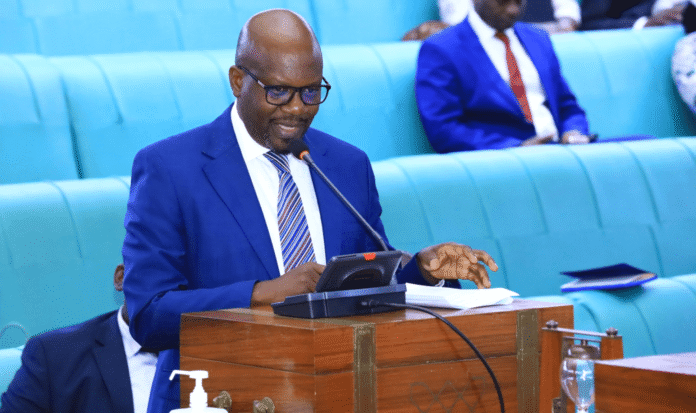
Kampala-Uganda – Mityana South MP Richard Lumu has withdrawn the Administration of Parliament (Amendment) Bill, 2024, just days before its scheduled plenary debate on 12 March 2026.
The bill proposed that opposition Members of Parliament elect the Leader of the Opposition (LoP), rather than allowing the largest opposition party to appoint the position automatically. The LoP represents minority voices in Uganda’s legislature and plays a key oversight role.
Lumu said he pulled the bill after learning that some MPs wanted to amend it. The proposed changes would have allowed all MPs, including those from the ruling National Resistance Movement (NRM), to vote for the LoP.
He argued that such an amendment would undermine the bill’s purpose because the NRM holds a commanding majority in Parliament. Allowing all MPs to vote, he said, would weaken the opposition instead of strengthening it.
According to Lumu, withdrawing the bill preserves its original intention of empowering minority voices without exposing the process to partisan dominance.
Political analyst David Soitre Masinde described the move as calculated and strategic. “The Lumu initiative served as a reminder to opposition leaders that they are vulnerable,” he said.
Masinde argued that a fully elected LoP could have shifted too much influence toward a more radical faction. He suggested that neither the ruling party nor moderate opposition groups would have welcomed such a shift.
By withdrawing the bill, Lumu maintained influence within parliamentary committees and avoided a direct political clash, Masinde added. Senior researcher Godfrey Nviri also supported the decision. He called the withdrawal “prudent,” saying it protects the opposition’s broader interests.
“The bill targeted an individual temporarily holding office. Pulling it was the right move,” he said. Nviri added that political leaders must prioritise collective party goals over personal ambitions.
Debate Over Parliamentary Practice
Dr Fred Mukasa Mbidde, former East Africa Parliament commissioner and vice president of the Democratic Party, revealed that Lumu consulted him before tabling the bill.
He explained that the Leader of the Opposition traditionally leads the minority party and does not require an election like certain government positions. “The LoP in Uganda, is equally at the same level to the Prime Minister, and both are appointed,” he said.
Mbidde added that some concerns raised in the bill could have been addressed through amendments to parliamentary rules rather than through new legislation.
Hon Solomon Silwany, Bukooli Central MP, said Lumu’s proposals contained valuable ideas. “The bill has many good points. Opposition members may bring it back, and some of us will support it,” he said.
Silwany insisted that timing, not rejection, led to the withdrawal. “The proposals address long-standing complaints about opposition members being sidelined by the LoP,” he added.
Gorreth Namugga, Mawogola MP and deputy chairperson of the Public Accounts Committee, noted that the bill lacked unified backing. “Legislation must serve all Ugandans, not just one party,” she said.
The Administration of Parliament (Amendment) Bill, 2024 now joins other withdrawn pieces of legislation. These include the Sexual Offences Bill, 2024, the Contract Farming Bill, 2023, and the Human Resource Management Professional Bill, 2025.
Speaker Anitah Among said the proposal did not align with Westminster parliamentary traditions. She added that lawmakers must review it carefully before reintroducing it in the 12th Parliament.
Despite its withdrawal, observers believe the bill could resurface. Many opposition MPs see it as an opportunity to reform how the LoP is chosen. Some also view it as a way to address concerns about marginalisation within the minority ranks.
Political analysts suggest that Lumu’s decision buys time. It allows space for consultation and possible redrafting. If reintroduced with broader support, the proposal could return in a more refined form. For now, the withdrawal signals strategy rather than surrender.