
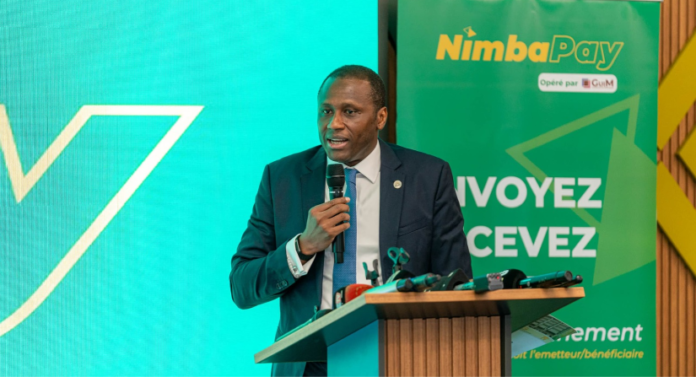
Conakry, 10 November 2026. NimbaPay, Guinea’s national instant payment system, has processed $2.18 million in transactions in its first three months. The Mojaloop Foundation, whose open-source software runs the platform, reported the figure. The result gives an early look at how a new payment rail performs in West Africa.
NimbaPay is Guinea’s national Inclusive Instant Payment System. It went live on 22 July 2026 and lets banks, e-money providers and microfinance institutions send money to each other instantly. The central bank led the launch, according to local reports. La Guinéenne de Monétique (GuiM), the national payment switch operator, runs the system.
Before such systems, payments between different providers often moved through separate networks. NimbaPay replaces that fragmented set-up with a shared network. A customer of one provider can therefore pay a customer of another in real time.
The AfricaNenda Foundation gave technical and strategic support. The system runs on open-source software from the Mojaloop Foundation, a non-profit that builds technology for interoperable instant payment systems. The Foundation says the project took about six months from start to launch. It also reports that more than 99% of transactions are processed automatically from start to finish.
The Foundation also trained local technical service providers, including the systems integrators who operate the platform. Consequently, Guinea can maintain and develop NimbaPay with its own teams. AfricaNenda’s managing director, Robert Ochola, said his organisation was proud to see Guinea become the third country it has supported with a national instant payment system.
By AfricaNenda’s 2025 count, Guinea is the 31st African country with an operational national instant payment system. It joins Rwanda and Liberia, which also use Mojaloop software. Other African markets have built their own rails. Nigeria runs the NIBSS Instant Payment platform, and Ghana uses GhIPSS Instant Pay. Rwanda has eKash, and Tanzania runs the Tanzania Instant Payment System.
Mojaloop’s technology has also powered a system outside Africa. It supported Higala in the Philippines, which launched in 2024.
The figure is modest next to the largest African payment networks. However, it covers only the first three months of a new system. Early volumes show that institutions have connected and customers are using the service. The next test is growth, as more providers join and new uses are added.
GuiM and its partners say they plan to scale NimbaPay and work on additional use cases. Financial inclusion remains the central goal, because shared rails can make digital payments cheaper and easier for people who currently rely on cash.
An instant payment system works like a shared road between providers. Each bank or mobile wallet connects once, and money can then move between any two participants. Customers benefit because transfers settle in seconds and do not depend on which provider the recipient uses.
Mojaloop’s chief executive, Jean Bosco Iyacu, called NimbaPay foundational digital public infrastructure that lets people and businesses in Guinea move money instantly, securely and affordably. Liberia’s central bank launched a similar system on Mojaloop in late 2025, which suggests that a regional pattern is forming.
From launch, NimbaPay has been open to customers of participating banks, electronic money institutions and microfinance institutions. The reports do not list every participant, so readers should check with their own provider. Microfinance institutions matter in particular, because they serve many people outside the main banking system.
The open-source model also gives Guinea a practical advantage. The country is not locked into a single vendor, and local engineers can learn and extend the code.
What this means: NimbaPay shows that a small economy can build national payment infrastructure quickly with open-source tools and regional support. Fence Africa 24 will track how the system grows.
Source: Fintech Futures; The Paypers; FF News (10 November 2026); TechAfrica News (10 November 2026); IT News Africa; We Are Tech Africa.