


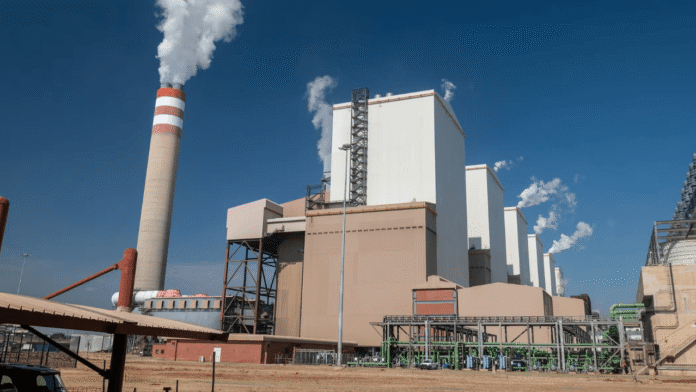
South Africa’s state-owned power utility, Eskom, says it is entering winter with more electricity available than the market currently needs, marking a significant change for a country long affected by power cuts. Following years of scheduled power cuts, Eskom anticipates South Africa’s first winter in almost ten years without interruptions. Winter typically challenges the grid as demand spikes.
Eskom chief executive Dan Marokane said the improvement followed an operational turnaround that began two years ago. The plan focused on repairing failing units, improving maintenance, strengthening plant management and restoring discipline across the generation fleet. “We’ve moved from [a consistent supply of] 9 per cent two years ago to 99.8 per cent now,” Marokane said, adding that the improvements were “sustained”.
The utility’s energy availability factor, which measures how much of its generation capacity is ready to produce power, has climbed to about 65%. A few years ago, Eskom’s performance had fallen below 50%, deepening the country’s electricity crisis and placing heavy pressure on businesses and households.
The change has created a new problem for Eskom. Instead of struggling to meet demand, the company now has to consider how to encourage greater electricity use in a weak economy. “Our problem has changed from one of undersupply to one where we actually now have to be thinking creatively around: how do we stimulate demand?” Marokane said.
South Africa has now gone more than 300 consecutive days without interruptions to the electricity supply. Eskom says it does not expect outages between April and August, the period when winter demand usually peaks.
The company plans to keep between 2 and 3 gigawatts of spare capacity on most winter days. That reserve should allow it to manage breakdowns without forcing the country back into emergency power cuts.
The turnaround is important for Africa’s most industrialised economy. For more than a decade, unreliable electricity has disrupted factories, mining operations, small businesses and daily life. It has also weakened investor confidence and slowed economic growth.
However, analysts warn that the stronger power supply must be viewed in context. South Africa’s economy remains weak, and many businesses and households have invested heavily in private solar power to reduce dependence on Eskom.
Chris Hattingh, executive director at the Centre for Risk Analysis, said Eskom deserved credit for the improvement. “You have to give them credit for getting to 65 per cent energy availability compared to less than 50 per cent a few years ago,” he said. “That does take work.” But he said the real test would come if economic growth improved and electricity demand rose again.
“But it is in the context of only 1 per cent [annual economic] growth, so there isn’t that much demand on the grid, and there’s been huge private sector investment in solar. If we get to 2 or 3 per cent growth, then we’ll see if the work they have done is really sustainable.”
Eskom’s crisis did not begin recently. It followed years of underinvestment, poor maintenance, weak governance, and delays at major coal power projects. Corruption and cost overruns further weakened the utility, while older power stations became increasingly unreliable.
Although supply has improved, Marokane said serious risks remain. One of the biggest is municipal debt. Local municipalities owe Eskom more than R130bn, placing a strain on the utility’s finances.
Eskom is now seeking more control over electricity distribution in struggling municipalities. The company wants agreements that would allow it to manage billing, maintenance and revenue collection in some areas. “We raise money in the capital markets, and you need to have some level of certainty of revenues,” Marokane said.
He warned that Eskom’s funding model would remain under pressure unless stronger financial arrangements were put in place. These may include more bankable solutions and possible access to state grants linked to municipalities.
Technical risks persist. Much of Eskom’s coal fleet is outdated, with ageing equipment causing frequent breakdowns. “The majority of our trips are as a result of obsolete control and instrumentation systems that have been running for 30, 40 years,” Marokane said.
Eskom has started replacing some of these systems, but analysts say the work will take several years to complete. Fuel expenses remain a concern. Eskom previously relied on diesel generators for emergency support. Though diesel use has declined, global supply disruptions may escalate costs, especially amid geopolitical instability.
For now, the utility says the system is more stable and easier to manage than it was during the peak of the power crisis. “Managing operational risks in an environment where you have a very solid base to operate from becomes an easier thing,” Marokane said.
Eskom’s recovery brings South Africa brief relief from years of power instability. The key challenge is sustaining progress, resolving financial strain, and supporting growth without repeating shortages.