


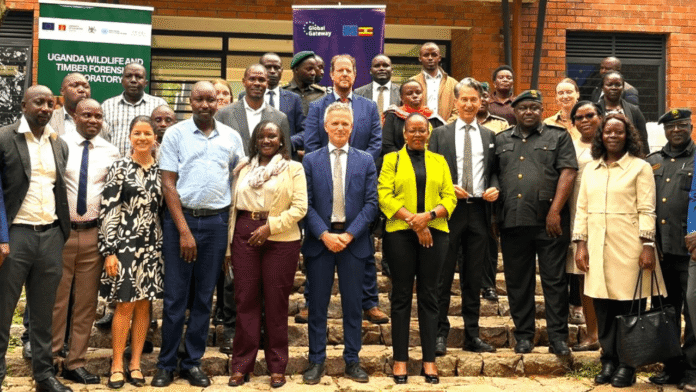
Uganda has intensified its efforts to combat illegal timber trade and wildlife crime by launching a new forensic laboratory, thereby enhancing enforcement through science-based investigations and prosecutions.
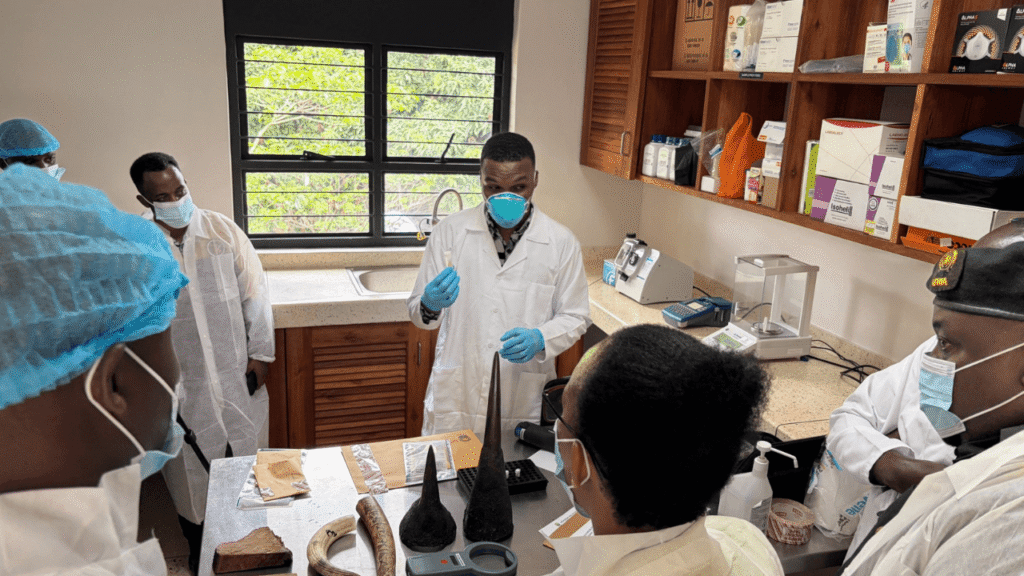
On April 29, 2026, the Uganda Wildlife Authority (UWA) unveiled the facility at the Uganda Wildlife Education Centre (UWEC) in Entebbe. The laboratory is positioned as a critical tool for generating DNA-based evidence to support court proceedings against individuals involved in illegal logging, timber trafficking, and wildlife crime.
The laboratory was established through collaboration with the Ministry of Water and Environment and other national agencies, supported by the United Nations Office on Drugs and Crime (UNODC), funded by the European Union, and benefitting from technical expertise provided by the TRACE Wildlife Forensics Network in the United Kingdom.
This development occurs amid substantial losses attributed to the illegal timber trade in Uganda. Sector estimates suggest that illegal timber constitutes approximately 80 percent of the domestic market, resulting in an estimated Shs 36.5 billion in lost tax revenue each year. Data from the National Forestry Authority (NFA) indicate that forest cover has declined significantly, from 24 percent in 1990 to about 13 percent in 2025.
Similar challenges are observed across East Africa. In Kenya, forest cover declined from approximately 10 percent at independence to about 6 percent in recent years, with an estimated annual loss of 12,000 hectares, according to Kenya Forest Service reports. In Tanzania, data from the Food and Agriculture Organisation (FAO) and government-linked studies indicate an annual forest loss of about 372,000 hectares. Illegal logging accounts for 30 to 50 percent of total timber harvests, resulting in revenue losses amounting to tens of millions of US dollars each year.
Globally, wildlife and forest crime is estimated to generate between 17 and 28 billion US dollars annually, according to the United Nations Environment Programme (UNEP) and UNODC. This places it among the most profitable forms of transnational organised crime.
At the launch, His Excellency Jan Sadek, European Union Ambassador to Uganda, stated that the inauguration of the laboratory signals that wildlife and forest crime are regarded as serious organised crime in Uganda and will be investigated, prosecuted, and punished accordingly.
“Until today, Uganda and the wider region have had no dedicated forensic capacity to identify timber species. Yet trafficking of protected timber is recognised globally as organised crime. This illegal trade is estimated at up to 20 billion euros annually, placing it among the most lucrative transnational crimes alongside drugs, arms and human trafficking,” he said.
“This laboratory is also a powerful symbol of partnership, which shows Uganda’s determination to protect its natural heritage and to confront environmental crime through strong institutions and the rule of law, and the commitment of the European Union and its member states, including Denmark to stand alongside Uganda in promoting sustainable development, conserving biodiversity, tackling climate change and addressing environmental crime as a priority in our cooperation,” he noted.
Her Worship Gladys Kamasanyu, Chief Magistrate of the Uganda Wildlife Court, stated that the laboratory will streamline court operations and provide results that enable the judiciary to hold offenders accountable.
“Usually seizures will be done, and what is seized is sometimes not material that can be seen and understood by only seeing some of the seized exhibits, which cannot be known. Now, here, science is going to tell us what they are, and that means the law becomes more effective because we can apply that science to say that is what science says. It is a protected species in Uganda, and therefore whoever is suspected to have committed a crime relating to that particular exhibit may not go free, so it is science meeting the law and making the law afford better protection to nature,” she said.
David Musingo, UWA Commissioner for Community Conservation and Ex-Situ Services, expressed appreciation for the facility, stating, “This laboratory will greatly assist us in wildlife crime investigations, DNA sample preparation, and the provision of court-admissible evidence to support investigations and the prosecution of wildlife offenders.”
He further noted that the laboratory will provide information that may reduce the need to bring animals to the UWEC facility, thereby lowering costs associated with medication and feeding. The facility is expected to significantly enhance Uganda’s capacity to disrupt illegal timber networks and strengthen accountability in the forestry and wildlife sectors through evidence-based enforcement.