


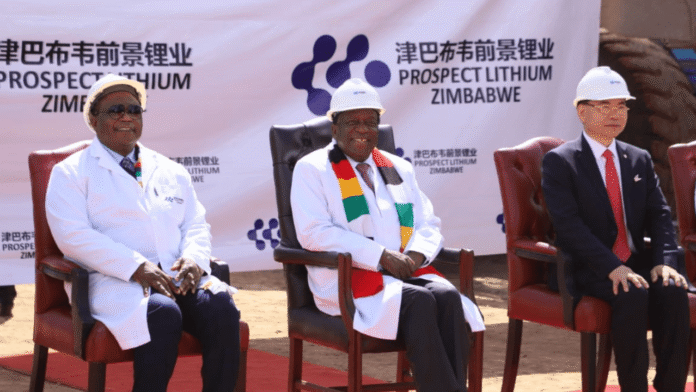
Zimbabwe has exported its first batch of lithium sulphate from Prospect Lithium Zimbabwe’s US$400 million processing plant, marking a major step in the country’s push to process more of its minerals locally.
The shipment is the first known production of lithium salt in Zimbabwe. It also signals progress in the government’s strategy to move the mining sector away from raw mineral exports and towards value-added production.
Prospect Lithium Zimbabwe, which operates the Arcadia Lithium Mine in Goromonzi, said the export represents an important moment for both Zimbabwe and the wider region. The company said the first shipment showed Zimbabwe’s growing capacity to participate in the global energy transition. Lithium is a key mineral used in batteries for electric vehicles and energy storage systems.
The development comes as the government tightens its approach to mineral exports. In February, authorities suspended the export of lithium concentrates and other raw minerals. The decision formed part of a broader plan to improve accountability, support local processing and retain more value from Zimbabwe’s mineral wealth.
The government has repeatedly said it wants the mining sector to drive industrialisation, jobs and broader economic growth. Officials argue that Zimbabwe must earn more from its resources by processing them before export.
Prospect Lithium Zimbabwe is wholly owned by Zhejiang Huayou Cobalt, a major Chinese mining company. Its Arcadia operation is one of the country’s key lithium projects.
The company’s public relations manager, Patience Chizodza, confirmed that construction of the processing plant had been completed. The facility is designed to produce 80,000 tonnes of lithium sulphate a year. She said the first export was dispatched over the weekend, although the company was not yet able to disclose the tonnage. “We received our quota from the ministry under the new framework,” she said.
After the export ban, the government introduced a quota system for lithium producers. The system allows some exports to continue under strict conditions while companies develop local processing capacity.
Mines and Mining Development Minister Polite Kambamura has said the government plans to fully phase out lithium concentrate exports by January 2027. By then, producers are expected to have processing plants in place. For now, the government says export quotas will help avoid major disruption in the sector while beneficiation capacity grows.
Lithium sulphate is used mainly as a precursor in the production of lithium hydroxide, a key material for lithium-ion batteries. It is also used in specialised glass and ceramics, as well as in some medical applications.
Zimbabwe holds Africa’s largest lithium reserves and ranks among the leading lithium resource holders in the world. The country is now trying to position the mineral as a central part of its mining-led growth strategy. The mining sector remains one of Zimbabwe’s most important economic pillars. It contributes more than 12% to gross domestic product and accounts for over 80% of export earnings.
Under the National Development Strategy 2, the government wants the lithium industry to move beyond lithium sulphate production. Its next focus is on lithium carbonate and lithium hydroxide, which are higher-value products used in battery manufacturing.
Finance, Economic Development and Investment Promotion Minister Mthuli Ncube has previously said lithium investment helped expand the mining sector under the first National Development Strategy.
That growth came through new mining projects, the reopening of closed operations and the expansion of existing mines.
The first lithium sulphate export from Prospect Lithium Zimbabwe is therefore more than a company milestone. It is a test of whether Zimbabwe can turn its mineral wealth into industrial capacity, stronger exports and a larger role in the global battery supply chain.