


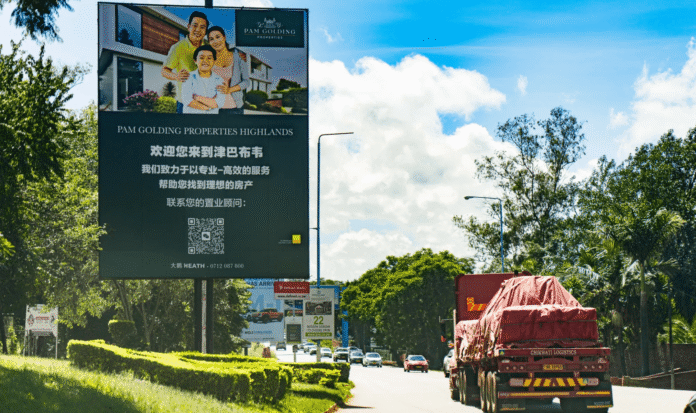
Harare is undergoing significant transformation, evident not only in new buildings and businesses but also in rising property values. This change reflects a deeper reordering of Zimbabwe’s economic relationships and aligns with a broader African trend in which traditional centres of influence are being replaced by emerging ones.
Foreign investors, particularly from China, are increasingly interested in Harare’s property market. Zimbabwe’s mining sector, especially lithium and gold, is drawing new capital. That capital is reshaping real estate, retail, hospitality, and business services across the capital. Chinese participation in Zimbabwe’s minerals sector has grown substantially in recent years.
The developments in Harare reflect a broader economic transition. Over the past two decades, Zimbabwe’s trade patterns have shifted considerably. The United Kingdom no longer holds its former dominant commercial position. China has emerged as a key economic partner. South Africa continues to play a central role in regional trade.
Zimbabwe’s exports have shifted toward minerals and Asian markets. U.S. government trade guidance shows China now receives the largest share of Zimbabwe’s tobacco exports. In February, Reuters reported that Zimbabwe has become Africa’s leading lithium producer. The country now supplies a significant portion of Chinese lithium concentrate imports.
Urban environments often reflect economic change before official narratives catch up. Capital flows first to where opportunities are most apparent. In Harare, that trend shows up in high-end property and retail activity. Supporting businesses that accompany new investment are also emerging.
External observers often frame Zimbabwe’s story solely in terms of decline. That perspective reduces the country to a crisis narrative. It overlooks areas where economic activity is actively reorganising.
Harare today tells a more complicated story. The capital is not simply living under the shadow of its past. It is adapting to a new economic geography. African, Asian, and Gulf capital now play a much larger role than before. Zimbabwe is not alone in this. Across the continent, commercial influence is shifting, companies are redrawing supply chains, and urban spaces are changing with them.
The mining sector is central to this transformation. Zimbabwe’s critical minerals have become increasingly strategic. Global demand for battery materials and industrial inputs continues to rise. Since 2021, Chinese firms have made substantial investments in Zimbabwe’s lithium industry. The Zimbabwean government has also tightened export regulations to encourage greater domestic value addition.
For these reasons, the changes in Harare warrant careful analysis. Property transactions, retail formats, and the city’s business landscape are interconnected. Together, they reflect broader trends in investment, mineral resources, and shifting trade patterns.
This period also carries political significance. Many observers characterise Zimbabwe as isolated. The commercial landscape in Harare tells a different story. It suggests realignment, not continued isolation.
Investors do not move into a market out of sentiment. They move because they see value, access, margins, or strategic opportunity. Harare’s appeal to new buyers and operators suggests that long-term investors are reading parts of this market very differently from the prevailing risk narrative.
Not all consequences are straightforward. Not all investments arrive without tension. Urban transformation frequently disrupts established social practices and perceptions of belonging. Nevertheless, the influx of capital is redefining the city. In the process, it is illustrating Zimbabwe’s evolving position in the global economy.
Harare is not simply absorbing foreign money. It is becoming a mirror of a broader African reality. Old hierarchies are weakening. New commercial partners are rising. Cities that once reflected colonial-era power structures are now taking shape around a very different set of economic relationships.