


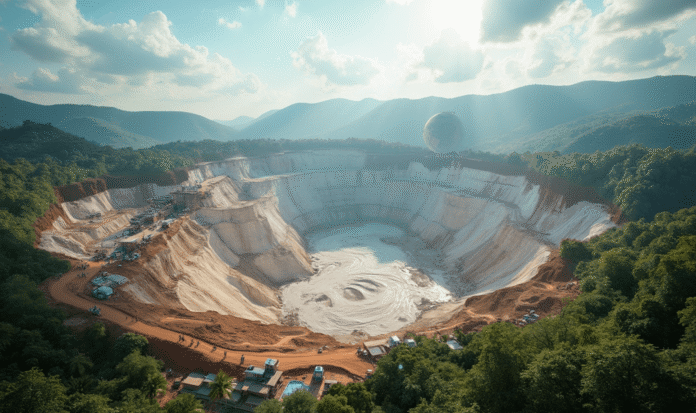
The Democratic Republic of Congo has revoked a 79-block lithium exploration permit linked to AVZ Minerals. Officials cited unpaid annual surface fees. The company now has 30 days to appeal. On paper, that may sound like a narrow licensing dispute. In practice, it marks something much bigger. Congo is drawing a firmer line on how foreign companies access strategic minerals and what the country expects in return.
That decision deserves to be read in its full context. The permit sits within the wider Manono lithium area, one of the world’s most important undeveloped hard-rock lithium deposits. Control of Manono has already triggered legal battles, competing claims and intense foreign interest. Reuters reported earlier this year that Congo had already reassigned part of the broader project area to Manono Lithium, a venture led by China’s Zijin Mining and state-owned Cominiere, after cancelling AVZ’s main permit.
Congo’s latest move therefore does more than punish non-payment. It reinforces a principle that many African countries now want to apply more forcefully. Strategic minerals cannot continue to leave the continent under old rules that favour extraction first and national benefit later. That model has enriched outsiders for decades while leaving producing countries with too little industrial growth, too little processing capacity and too little control over value chains. This is an inference based on the policy direction taken by Congo and other African states as they tighten mining terms and push for greater local benefit.
A tougher stance on who benefits from Africa’s minerals
Congo has strong reasons to act this way. Critical minerals now sit at the centre of the global energy transition. Lithium, cobalt and copper power electric vehicles, batteries and digital infrastructure. Yet the countries that hold these resources still face the old danger of exporting raw wealth while others capture the real profits through refining, manufacturing and technology. Reuters reported last week that Kinshasa has been pressing for more transparent investment and more local processing as it deepens mining ties and rethinks how mineral wealth should serve the country.
That shift is not unique to Congo. It reflects a wider change across the continent. In Ghana, the government has moved to scrap mining stability agreements and raise royalties. Reuters said the plan forms part of a broader push by African governments to demand stricter terms and a bigger national share from extraction. Across multiple jurisdictions, policymakers are no longer content to host mining activity that creates wealth abroad while communities at home wait for jobs, infrastructure and industrial value addition.
Seen in that light, Congo’s decision looks less like a technical sanction and more like a statement of intent. Governments will act when companies fail to meet their obligations. They will also seek greater control when projects become trapped in disputes and national interests stall. With strategic minerals set to shape the next global economy, African states increasingly want a stronger hand in deciding how that future is built.
This creates a harder environment for foreign mining firms. But it is also a more honest one. Investors now face greater compliance demands, stronger local-content pressure and a higher risk of legal confrontation when projects touch politically sensitive resources. Reuters reported this month that contested licences, conflict and stricter requirements are already complicating outside efforts to secure critical minerals in Congo.
For too long, Africa’s mineral story has followed a familiar script. Foreign firms secured licences. Raw materials left the ground. The deepest value emerged elsewhere. Congo’s action suggests that script is losing its hold. Governments across the continent are now asking sharper questions about benefit, processing, industrialisation and long-term value.
In Manono, those questions now sit at the centre of the dispute. AVZ’s permit loss may have started with unpaid surface fees. Its wider meaning is political and economic. Congo is showing that access to its minerals is no longer enough. Companies must also fit a tougher vision of accountability, national interest and resource governance.
That is why this decision matters beyond one company and one permit. It reflects a broader African shift away from passive extraction and towards firmer resource control. The continent is not rejecting investment. It is rejecting the old terms of investment. And in the age of critical minerals, that may prove to be one of the most important shifts in Africa’s economic story.