


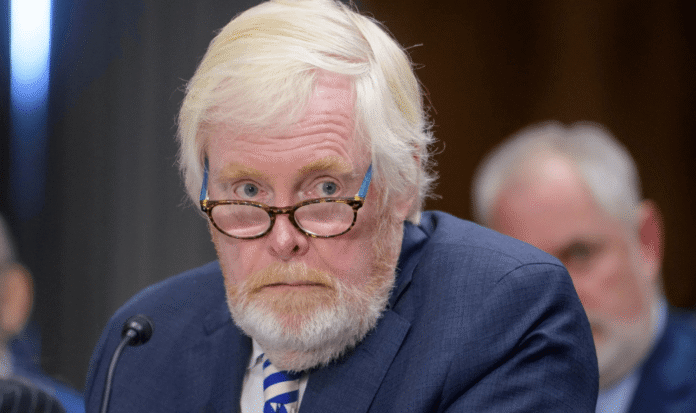
South Africa has summoned the United States ambassador after comments he made about the country’s racial policies and court rulings. The move marks a fresh strain in already tense diplomatic relations.
Foreign Minister Ronald Lamola confirmed on Wednesday that Pretoria had called in Ambassador Brent Bozell. The government wants clarity on remarks delivered during his first public address since taking office last month. “We have called in the ambassador of the United States, Ambassador Bozell, to explain his undiplomatic remarks,” Lamola told journalists.
Bozell arrived in South Africa at a delicate moment. Relations between Pretoria and Washington have cooled in recent months. Disagreements range from South Africa’s genocide case against Israel to former US President Donald Trump’s claims that white Afrikaners face persecution.
During a meeting with business leaders on Tuesday, Bozell described the apartheid-era chant “Kill the Boer, kill the farmer” as hate speech. The slogan remains controversial. However, South African courts have ruled that it must be understood in the context of the liberation struggle.
Bozell rejected that interpretation. “I’m sorry, I don’t care what your courts say, it’s hate speech,” he said at Tuesday’s meeting of business leaders.
His remarks sparked immediate criticism. Many argued that a foreign diplomat should respect the country’s judiciary.
On Wednesday, Bozell appeared to soften his stance in a post on X. “I want to clarify that while my personal view like that of many South Africans is that ‘Kill the Boer’ constitutes hate speech, the U.S. government respects the independence and findings of South Africa’s judiciary.”
The slogan has featured in American political debate before. During a White House meeting in May last year, Donald Trump played footage of an opposition politician chanting it. He cited the clip to support claims of violence against white farmers. South African authorities have consistently rejected those claims.
Bozell also criticised South Africa’s broad-based black economic empowerment policies. He argued that they had contributed to economic “stagnation”.
The policies aim to address inequalities created by apartheid. They promote greater participation of black South Africans in ownership and management.
Lamola firmly defended the framework. “We reiterate that broad-based black economic empowerment is not reverse racism as regrettably insinuated by the ambassador.”
“It is a fundamental instrument designed to address the structural imbalances of South Africa’s unique history. It is a constitutional imperative that the South African government can and will never abandon,” he said.
Summoning an ambassador is a formal diplomatic step. It signals serious concern but stops short of expulsion or sanctions.
South Africa and the United States remain important trading partners. Both countries cooperate on security, health and investment. However, policy differences have grown more visible.
Whether this episode leads to deeper friction or renewed dialogue remains unclear. For now, it highlights how domestic policy debates can quickly spill into diplomatic relations.
The dispute also underscores the sensitivity of South Africa’s history. Issues tied to apartheid, race and economic reform continue to shape both internal politics and foreign engagement.