


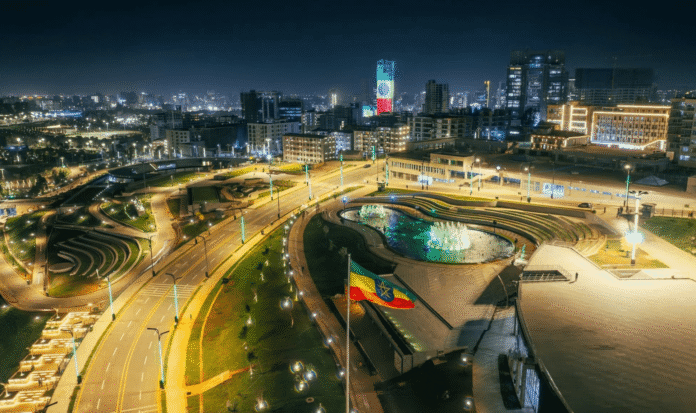
Addis Ababa — As leaders gather for the 2026 African Union Summit, the Addis Ababa Urban Corridor Development programme is taking centre stage, highlighting Ethiopia’s push to redesign its capital around pedestrians, cyclists and green mobility.
The transformation links Bole International Airport to the city centre and extends toward Entoto. Wide pavements, marked cycling lanes and upgraded lighting now define corridors that once prioritised vehicle traffic. Officials say the Addis Ababa Urban Corridor Development reflects a broader shift in how the city plans for growth.
Addis Ababa has long faced congestion, pollution and uneven pedestrian infrastructure. However, recent upgrades aim to rebalance public space.
Widened footpaths allow residents to move safely without stepping into traffic. Dedicated cycling lanes provide alternatives for short commutes. Improved street lighting enhances safety after dark.
Urban planners argue that such measures reduce pressure on public transport, lower emissions and encourage healthier daily routines.
The Addis Ababa Urban Corridor Development aligns with Ethiopia’s national strategy for transport electrification.
Bareo Hassen, Ethiopia’s State Minister of Transport and Logistics, has placed electric vehicle adoption at the centre of reform. His ministry promotes green mobility as a tool for economic stability.
“Electrifying the transport sector strengthens economic resilience and reduces fuel dependency,” Bareo Hassen has said.
Ethiopia continues to expand charging infrastructure and encourage electric vehicle imports. Policymakers see electrification as both environmental reform and economic strategy.
As host of the AU Summit, Addis Ababa carries symbolic weight. Yet the Addis Ababa Urban Corridor Development also supports practical objectives.
Improved corridors facilitate trade flows and urban logistics, aligning with continental initiatives such as AfCFTA. Officials argue that efficient infrastructure strengthens regional integration while improving everyday mobility.
Urban development experts caution that long-term maintenance will determine the programme’s success. Nevertheless, the shift is visible.
In several districts, pedestrians now walk along structured pavements where congestion once dominated. Cyclists navigate defined lanes rather than competing with buses and taxis.
As summit delegates meet in the Ethiopian capital, the Addis Ababa Urban Corridor Development presents a clear message: infrastructure can support diplomacy, commerce and citizens simultaneously when designed with people in mind.