


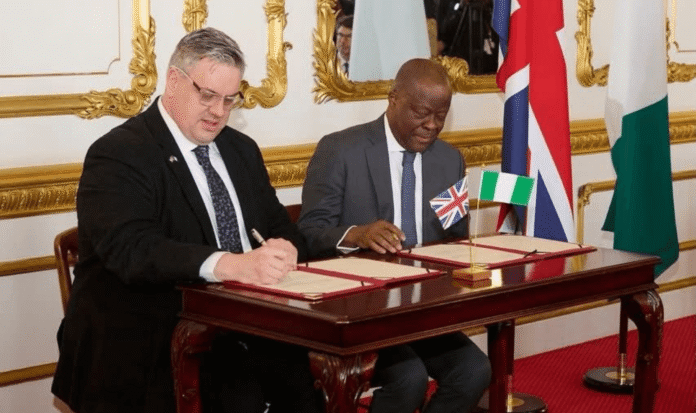
The UK–Nigeria export finance deal worth £746 million will modernise the Lagos Port Complex and Tin Can Island Port Complex, two facilities that handle more than 70% of Nigeria’s seaborne cargo. Valued at approximately $990 million, the agreement focuses on upgrading critical infrastructure, reducing congestion at Apapa, and strengthening logistics performance in West Africa’s largest economy.
The deal was signed during Nigerian President Bola Ahmed Tinubu’s official visit to the United Kingdom, marking a significant step in deepening bilateral trade and infrastructure cooperation.
The Lagos Port Complex, commonly known as Apapa Port, and Tin Can Island Port serve as Nigeria’s primary maritime gateways. They process the bulk of imports and exports, including petroleum products, manufactured goods, agricultural commodities and industrial equipment.
For years, both ports have struggled with ageing infrastructure, congestion and operational inefficiencies. Vessel turnaround times have lengthened, cargo clearance delays have increased and logistics costs have risen sharply. These challenges have disrupted supply chains and placed additional pressure on businesses and consumers.
The UK–Nigeria export finance deal aims to address these systemic bottlenecks by upgrading facilities, improving port efficiency and expanding handling capacity.
Citibank arranged the £746 million financing package, while UK Export Finance (UKEF), the British government’s export credit agency, provided the guarantee. UKEF enables overseas buyers to secure competitive financing when purchasing goods and services from UK suppliers.
Under the agreement, contracts worth £236 million will benefit British companies. British Steel secured a £70 million contract as part of the infrastructure upgrade. The guarantee ensures that UK suppliers remain competitive while supporting Nigeria’s development priorities.
The UK–Nigeria export finance deal provides a direct boost to British manufacturing and engineering. The British Steel contract highlights the strategic importance of heavy industry in large-scale global infrastructure projects.
This agreement aligns with the UK government’s broader trade strategy, which seeks stronger commercial ties with high-growth African markets. By combining export guarantees with infrastructure collaboration, the deal strengthens Britain’s industrial footprint abroad while supporting domestic manufacturing jobs.
For Nigeria, port reform remains central to economic transformation. Efficient ports reduce shipping delays, lower logistics costs and improve trade competitiveness. Modernising Lagos ports could ease congestion at Apapa, streamline cargo movement and enhance Nigeria’s position as a regional maritime hub.
The refurbishment also supports Nigeria’s participation in the African Continental Free Trade Area (AfCFTA). Improved port infrastructure will help facilitate intra-African trade and position Lagos as a gateway for regional commerce.
The signing of the UK–Nigeria export finance deal during President Tinubu’s UK visit underscores a growing strategic partnership. Trade relations between the two countries already span energy, finance, education and professional services. Infrastructure cooperation now adds a new pillar to that relationship.
By pairing British export capacity with Nigerian infrastructure needs, both countries advance economic objectives. The UK secures export growth and industrial contracts, while Nigeria modernises critical logistics infrastructure that underpins national development.