


When African leaders speak about boosting intra-continental trade, attention often turns to tariffs, customs procedures and logistics corridors. Yet one of the biggest barriers to trade lies elsewhere, in technical standards.
A product that passes inspection in one country frequently faces fresh testing in another. Certificates are reissued. Laboratory processes are repeated. Costs accumulate quietly. For manufacturers, especially small and medium-sized firms, those repeated procedures can mean the difference between expansion and stagnation.
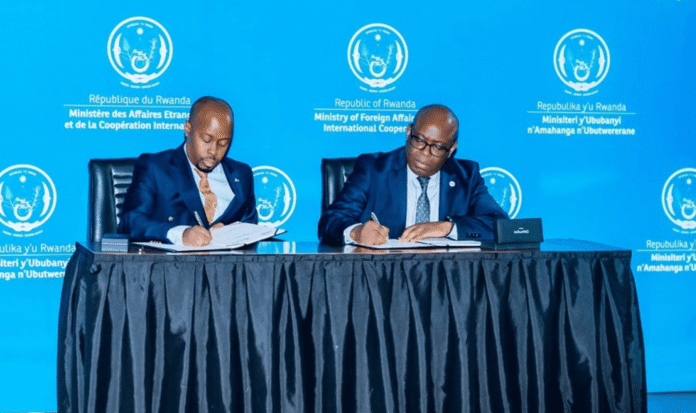
It is against this backdrop that Zimbabwe, Rwanda and the Republic of the Congo have signed a Mutual Recognition Agreement to align standards and recognise each other’s certification systems. The agreement followed a three-day meeting of the African Organisation for Standardisation (ARSO) Technical Committee 53, which focused on textiles, textile products and accessories, sectors with strong industrial potential across the continent.
The principle behind the agreement is simple: if a product has already been tested and certified in one of the three countries in line with agreed standards, the others will accept that certification without repeating the process.
In practical terms, this reduces delays, cuts costs and lowers technical barriers at borders. Strategically, it strengthens the foundation for industrial growth.
Rwanda Standards Board director-general Dr Raymond Murenzi described the agreement as part of a broader continental shift.
“This builds a wave for business communities in these countries to trade together as we endorse and prioritise the operationalisation of the trade facilitation ecosystem under the AfCFTA mutual recognition agreements,” he said.
Dr Murenzi also linked the initiative to a larger ambition: “one standard, one test, one certificate accepted everywhere in Africa.”
That vision speaks directly to a long-standing challenge. Africa’s markets remain fragmented not only by geography but by regulatory differences. Even where countries operate under similar frameworks, such as Zimbabwe’s largely British-derived standards systems, the absence of mutual recognition often forces exporters to repeat the same compliance procedures.
Standardisation, therefore, is not merely technical alignment. It is institutional trust. When regulators recognise each other’s certification marks, they effectively acknowledge the competence and credibility of each other’s systems.
For Zimbabwe, which maintains established standards frameworks aligned with international norms, the agreement strengthens its position in regional trade.
Standards Association of Zimbabwe director-general Mr Cosmus Mukoyi said the deal complements existing trade relations with Rwanda and will widen access for businesses.
“Once a Rwandan product comes with a standard mark from Rwanda, we will not test it again when it enters Zimbabwe. This will facilitate the smooth movement of goods between our two countries,” he said.
He explained that the framework eliminates duplication and reduces the cost of doing business. “What this agreement does is remove duplication of processes. If a product has already been tested and certified in Rwanda or the Republic of the Congo in line with agreed standards, our systems will recognise that certification,” he said.
“This means businesses will save time and money that would otherwise be spent on repeated laboratory tests and inspections, and that ultimately lowers the cost of doing business across our borders.”
Beyond efficiency, Mukoyi emphasised the importance of confidence. “Standards are about confidence in products. When we recognise each other’s certification systems, we are essentially saying that our institutions trust one another’s processes and technical competence,” he said.
“This is critical for strengthening intra-African trade because it assures consumers and regulators that goods circulating within our markets meet the same quality and safety requirements.”
Trade between Zimbabwe and Rwanda currently centres largely on electrical products, but officials see room for diversification. “At present, electrical products form a significant component of trade between Zimbabwe and Rwanda,” Mukoyi said.
However, he added that textiles, clothing and other manufactured goods present strong potential as industries develop further. “We are also looking at strengthening cooperation in manufacturing because industrial development is key to ensuring that Africa trades more with itself rather than relying heavily on imports from outside the continent.”
Textiles, the focus of the ARSO technical discussions, represent a sector where common standards could unlock scale. If manufacturers produce garments and fabrics that meet harmonised continental benchmarks, they can expand distribution without redesigning products for each market.
Rwanda’s Minister of Trade and Industry, Prudence Sebahizi, underlined that regulatory alignment must accompany increased production capacity. “At the outset, the market cannot succeed if we are still consuming what is coming from outside Africa. That is why intra-African trade is still very low,” he said.
His remarks point to a broader reality. Trade facilitation mechanisms such as the African Continental Free Trade Area create opportunities, but opportunities require supply.
Standardisation provides the technical backbone for that supply. Without consistent standards, manufacturers hesitate to scale. With harmonised benchmarks, production lines can expand with greater certainty. Investors gain clarity. Buyers gain confidence.
The agreement among Zimbabwe, Rwanda and the Republic of the Congo may involve only three countries, but its implications extend further. If similar mutual recognition frameworks spread across the continent, Africa could move closer to a unified quality infrastructure.
Such a shift would not only ease trade but also enhance the global credibility of African-made goods. Standardisation does not capture public attention in the way political declarations do. Yet it remains one of the most powerful tools for transforming trade into sustained industrial growth.
By aligning standards and recognising each other’s certification systems, the three countries have taken a practical step toward reducing fragmentation, encouraging manufacturing and strengthening competitiveness.
In a continent seeking to trade more with itself and be less dependent on external imports, shared standards may prove to be one of the most consequential agreements of all.