
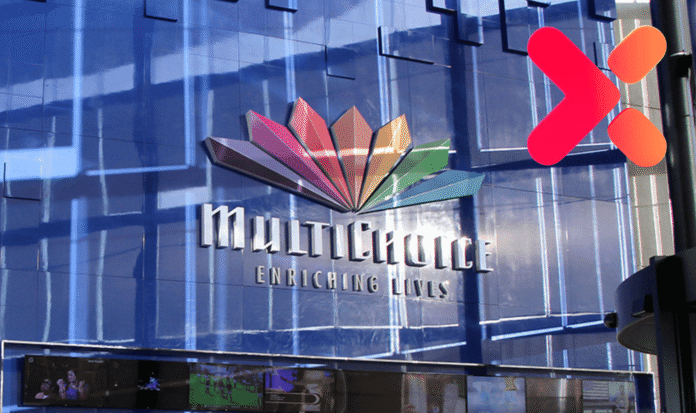
Last Wednesday, MultiChoice South Africa announced the shutdown of Showmax after years of financial losses had weighed heavily on the streaming platform. The news arrived just days before the South African Film and Television Awards (SAFTAs) this Friday, prompting an uncomfortable question across the industry: what does this mean for local and broader African storytelling?
Once positioned as the centrepiece of MultiChoice’s growth strategy in Africa, Showmax leaves behind a complicated legacy, one that reshaped African streaming even as it struggled to secure lasting financial stability.
Showmax launched in August 2015, only months before Netflix entered the African market in January 2016. The timing was deliberate. MultiChoice wanted to claim Africa’s streaming future before global giants like Netflix, Amazon Prime and Apple TV gained dominance.
For a while, the gamble appeared justified. Yet the financial picture told a different story. Even after a high-profile 2024 relaunch backed by a $309 million partnership with Comcast’s NBCUniversal, using Peacock’s streaming technology, Showmax could not close the gap between ambition and profitability. By the 2024/2025 financial year, losses had widened by 88%, reaching R4.95 billion.
“This decision reflects MultiChoice’s continued focus on financial discipline and investment optimisation in an increasingly competitive and capital-intensive global streaming environment,” the company said.
Canal+ CEO Maxime Saada offered a blunter assessment during a January 2026 investor call, describing Showmax as simply “not commercially successful.”
The Canal+ acquisition of MultiChoice, finalised in 2025 for $2 billion, marked a significant shift in African media ownership. The French broadcaster soon outlined plans to generate more than €400 million in annual savings through restructuring, a strategy that ultimately hastened difficult decisions about underperforming assets like Showmax.
The announcement landed with sharp irony at the 8th Joburg Film Festival. A panel discussion titled “The French Connection” was about to explore creative collaboration between Africa and Europe. Instead, audiences received news that a French conglomerate had pulled the plug on Africa’s largest homegrown streaming platform.
That symbolism has not gone unnoticed. For many in the industry, the closure raises broader questions about foreign ownership and long-term commitment to African storytelling. The Economic Freedom Fighters (EFF) cautioned against the risk of foreign-controlled platforms shaping local narratives primarily for profit.
“Showmax has become a staple in the streaming services industry in South Africa,” the party said, emphasising its importance as a space where authentic South African stories could flourish.
South African filmmakers have expressed uncertainty about what comes next. In an interview with Newzroom Afrika, filmmaker and Black Brain Pictures founder Mandla Ngcongwane (Mandla N) questioned the implications for local commissioning and the future of existing content.
The concern extends beyond direct employees. MultiChoice confirmed that the Showmax shutdown would not involve retrenchments, and staff would be supported through transition options. However, Showmax was more than an employer. It was a commissioning engine.
Every Showmax Original supported an ecosystem of directors, writers, actors, cinematographers, editors, costume designers, freelancers, and production companies. When a commissioning platform disappears, so too does the next contract, and for freelancers, there is no redundancy package to soften that blow.
For production houses such as Black Brain Pictures, which produced DiepCity, Lockdown and The Queen, the implications are significant. The uncertainty Mandla N expressed reflects the quiet calculations happening across the industry. Showmax’s closure does not stand in isolation.
In January 2024, Amazon MGM Studios abruptly stopped commissioning local originals in Nigeria and South Africa. Development deals collapsed overnight. Two years later, a familiar pattern seems to be unfolding again: when global platforms face financial strain, African content often becomes vulnerable.
Canal+ has moved to reassure subscribers and stakeholders. The company insists it will continue investing in premium content for MultiChoice subscribers and strengthening its position in the African entertainment market.
Yet reassurance does not entirely resolve anxiety. The contrast becomes even sharper this Friday at the SAFTAs.
This year’s ceremony is record-breaking, with 471 submissions and 434 compliant entries, a sign of remarkable creative vitality. Showmax Originals alone secured 66 nominations.
Leading the nominations is The Fix, a dystopian body-horror from Crave Pictures directed by Kelsey Egan, with 11 nods, including Best Feature Film. Other nominated Showmax Originals include Adulting, Spinners, Devil’s Peak and Blood Psalms, projects that showcase bold, genre-pushing African storytelling.
The talent is undeniable. The creativity remains vibrant.
But as the industry gathers to celebrate, one question hangs in the air: who will finance the next wave of these stories?
The Showmax shutdown reflects deeper shifts in global streaming economics. Platforms now operate in a capital-intensive environment where scale and profitability often outweigh regional experimentation.
Showmax helped redefine African streaming. It proved that African audiences would embrace local stories at scale. It demonstrated that production standards could compete globally.
Its closure does not erase that legacy. Yet it does mark the end of a chapter, one written with ambition, risk and creative courage.
As the lights shine at the SAFTAs, the applause will be genuine. But behind the celebration lies a more sobering reality: Africa’s storytellers remain ready. The question is whether the platforms will remain willing to back them.