
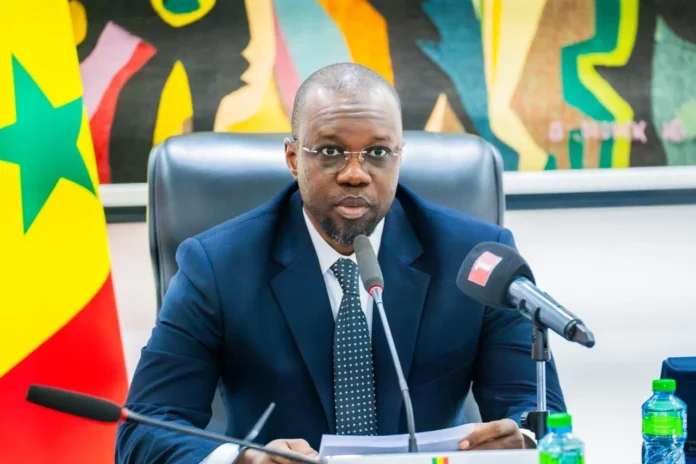
Senegal has launched a major overhaul of resource governance, prompting renewed scrutiny of how African states manage their natural assets. Prime Minister Ousmane Sonko has declared key contracts unfair, revoked dozens of mining licences, and frozen corporate accounts over unpaid state debts. This shift is driven by fiscal pressures and a rise in resource nationalism across the continent.
Central to this policy shift is Senegal’s review of contracts governing the extraction and sale of its natural resources, especially oil and gas. Officials state that previous agreements favored international corporations over national interests. The government now seeks to rebalance these relationships, lower gas costs for industry and households, and strengthen public finances.
In a televised statement, Sonko said the government would revisit contracts signed under previous administrations and renegotiate terms that did not reflect Senegal’s interests. “The contracts that have been signed are unfair contracts, which we intend to discuss in detail,” he said, underscoring the depth of the review.
A key agreement under review is the gas contract for the Greater Tortue Ahmeyim (GTA) project, operated by BP. The government found the terms heavily favored the foreign partner and has called for renegotiation. This could significantly affect energy prices in Senegal, where high costs have been a concern for both industry and consumers.
The government froze the accounts of Industries Chimiques du Sénégal (ICS), a subsidiary of Indorama Corporation, until it pays an estimated €380 million ($438 million) owed to the state. Licences for 71 mining operations, including gold, were also revoked due to non-compliance. These actions demonstrate a commitment to enforcing compliance.
Senegal’s strategy extends beyond energy contracts. The administration has cancelled exploration licences for offshore blocks considered overly large or inconsistent with international best practices, including Diender Offshore and Rufisque Offshore, which have attracted international investors.
The government is also working to nationalise the Yakaar-Teranga gas field, currently operated by Kosmos Energy. Negotiations to transfer control to the state at no cost are reportedly close to completion. If successful, this would be a rare example of an African government gaining sovereign control over a major hydrocarbon asset without compensation.
These measures come during a challenging period for Senegal’s economy. The International Monetary Fund reports that public debt reached 132% of GDP by the end of 2024, leading to a suspension of its lending programme after previously misreported figures came to light. Domestic unrest, including teacher strikes and student protests over unpaid aid, highlights widespread public dissatisfaction.
Supporters argue that renegotiating contracts is necessary for Senegal to gain more value from its resources. Critics contend that international firms have long benefited disproportionately, while the state and citizens have seen limited returns. By strengthening its negotiating position, Dakar aims to lower fuel costs, secure better royalties, and enforce higher standards of economic transparency.
“This review will build a more balanced relationship between Senegal and the companies operating here,” said an economist in Dakar, speaking on condition of anonymity. Analysts in the region note that Senegal’s agenda resonates with broader demands across Africa to reform deals that were struck under unequal conditions during earlier eras of liberalisation.
Senegal’s strategy reflects broader trends across Africa. In Ghana, the government is renegotiating oil and mining contracts that critics say disadvantaged the state. Zambia is implementing policies to capture more copper revenue, while Niger has revoked mining licences over non-compliance. These actions illustrate a growing movement toward resource nationalism, as governments seek greater control over national assets.
This assertive approach has raised concerns among investors, prompting international companies to reassess risks in frontier markets. BP has not commented on Senegal’s claims regarding the GTA contract, while Kosmos Energy has expressed uncertainty about its future in the country.
Mining and energy firms are monitoring these developments, recognising that Senegal’s approach may signal a new era of tougher negotiations. Some warn that unilateral actions could deter investment unless supported by clear legal frameworks. Others emphasise that renegotiations should be constructive to attract long-term capital.
Whether Senegal’s resource strategy will deliver cheaper gas, healthier public finances, and more equitable deals remains uncertain. What is clear is that Sonko’s government is willing to challenge longstanding contracts and redefine the relationship between state and industry.
For Senegal, the stakes are high: financial stability, lower energy costs, and stronger national control over resources. Meanwhile, in Africa, the unfolding debate highlights a wider question: who benefits from the continent’s abundant natural wealth, and on what terms?