
Girl Up EMEA youth leadership is driving a powerful movement across Europe, the Middle East and Africa. As part of the global Girl Up network under the Global Fund for Children, the regional initiative supports adolescent girls to become organisers, advocates and decision-makers in their communities.
Today, Girl Up EMEA supports more than 40 active clubs. It also connects a growing community of over 1,000 girl leaders. These young leaders organise, advocate and mobilise around issues that directly affect girls’ lives. These include menstrual health, education access, civic participation, leadership development and STEM inclusion.
Girl Up youth leaders are active across Zimbabwe, Palestine, Namibia, Egypt, the United Kingdom, Zambia, Lebanon, Ghana, Kenya and Nigeria, among others. Through locally led Girl Up Clubs, girls design and implement initiatives in their schools and communities.
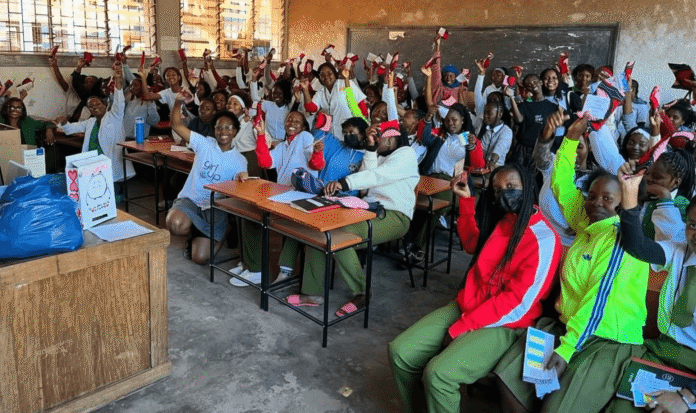
Activities range from fundraising for books and educational materials to distributing menstrual hygiene kits and reusable pads. Many clubs also host advocacy events and community dialogues. These focus on menstrual health, girls’ education, youth leadership and gender equality.
In several countries, young leaders invite policymakers, activists and educators to engage directly with girls. This ensures youth voices are included in spaces where decisions are made.
The movement stands out because it is youth-led. As the organisation explains:
“What makes this movement unique is that it is youth-led: girls are not simply program participants, but organizers, advocates, and decision-makers shaping the direction of their work in their own communities.”
Girl Up EMEA operates under a clear theory of change. When girls gain access to leadership opportunities, knowledge, networks and resources, they become powerful agents of change.
The model focuses on three outcomes:
- Building leadership skills and confidence among adolescent girls
- Supporting youth-led advocacy and community action
- Strengthening networks and partnerships that amplify girls’ voices
Through these pathways, young leaders gain tools to influence policy discussions. They challenge harmful norms. They implement sustainable solutions.
The impact goes beyond individuals. When girls organise dialogues or lead workshops, they address immediate needs. They also shift perceptions about girls in leadership and civic life.
Menstrual health advocacy remains a visible area of impact. In many African communities, limited access to menstrual products affects school attendance and confidence.
Girl Up Clubs respond with practical solutions. In Zimbabwe, youth leaders developed a menstrual hygiene handbook. It was distributed both online and in print. In several communities, leaders teach girls how to make reusable pads. So far, these workshops have supported more than 50 girls and women.
These programmes combine dignity, sustainability and peer education.
Digital Advocacy and Cross-Border Collaboration
Digital advocacy plays a growing role in the movement. Girl Up Clubs organise online campaigns, webinars and regional discussions. These sessions connect girls across countries.
Across EMEA, youth leaders have delivered more than 100 in-person and virtual activities. These address menstrual health, gender equality, youth civic engagement and leadership development.
Digital platforms strengthen collaboration and expand reach beyond borders. Girl Up EMEA also invests in structured leadership development programmes.
WiSci (Women in Science) STEAM Gatherings
WiSci STEAM gatherings bring adolescent girls together to build skills in science, technology, engineering, arts and mathematics. The programme also strengthens leadership and cross-cultural collaboration.
In 2025, the WiSci Southern Africa STEAM Camp in Johannesburg brought together 70 girls aged 15–17 from South Africa, Namibia, Zambia and Zimbabwe. During the week, participants attended expert-led workshops in coding, robotics, engineering and leadership.
WiSci operates through public-private partnerships. These include Google, the Caterpillar Foundation, TE Connectivity and UL Research Institute. The partnerships allow girls to interact with professionals in STEM fields.
Since WiSci launched in Africa, hundreds of young women have participated.
The Leadership Cohort Programme brings together 15 youth leaders for a six-month virtual programme. Participants engage in sessions on advocacy, storytelling, project management and community mobilisation. They also receive mentorship and peer learning support. Upcoming initiatives include the Girl Up Ubuntu Leaders Programme and the Grassroots Leaders Programme.
Partnerships remain central to Girl Up EMEA’s work. The organisation collaborates with NGOs, schools, universities, community leaders and government institutions.
These partnerships ensure programmes remain locally relevant. They also expand access to mentorship, funding and platforms.
Youth Leader Perspectives
Mercia Hove, Zimbabwe
Mercia describes Girl Up as transformative. “Girl Up taught me that leadership is not about titles, it’s about service, consistency, and courage.”
She led reusable sanitary kit workshops in her community. “What began as a sustainability initiative became something much bigger. It wasn’t just about creating reusable products, it was about restoring dignity, confidence, and independence.”
Despite limited resources, she focuses on collaboration. “Instead of focusing on what we lack, we focus on impact, even if we start small.”
Fatema AlZahraa, Egypt
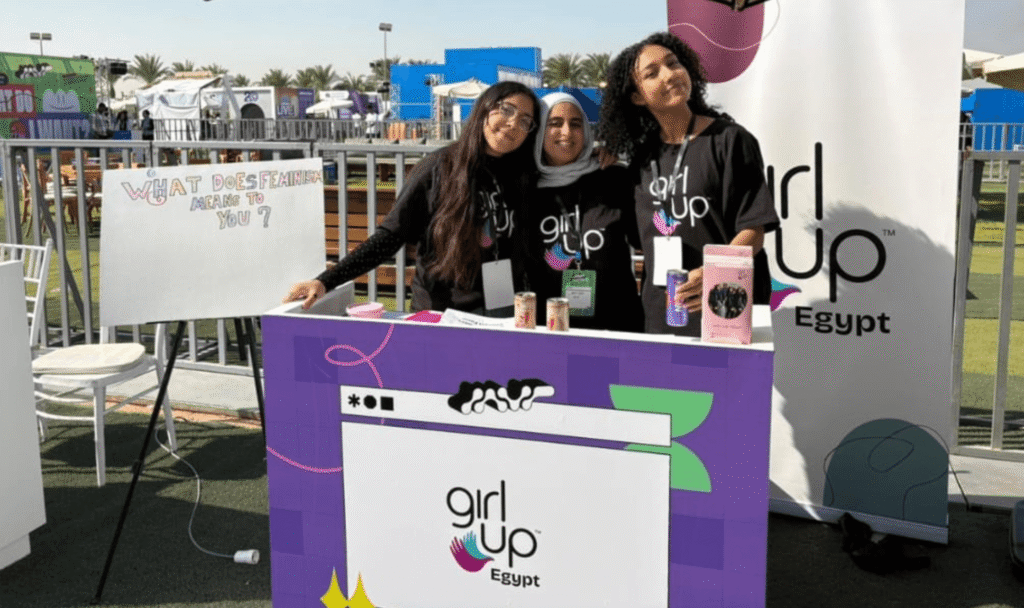
Fatema founded the Girl Up Egypt Coalition. She inspired more than 250 young women to join.
Her most impactful moment was the Girl Up Egypt Leadership Summit in February 2025. More than 150 girls attended workshops and speeches. “I would advise future youth leaders to always take that first step,” she says.
Luana Maguele, Mozambique
Luana says Girl Up shifted her mindset. “It has shown me that I, as a young girl from Mozambique, am able to create meaningful change.” Through a Girl Project Award, she led an initiative that reached over 900 primary school children. She hopes to pursue studies in economics and neuroscience while continuing advocacy in women’s health.
Girl Up EMEA plans to expand its network of clubs. It will increase mentorship opportunities and strengthen STEM pathways. It also aims to deepen youth-led advocacy across the region. At its core, the movement rests on a simple truth: girls are already leading change. What they need most is recognition, resources and opportunity.
By investing in girls’ leadership today, Girl Up EMEA supports lasting transformation across the region.