


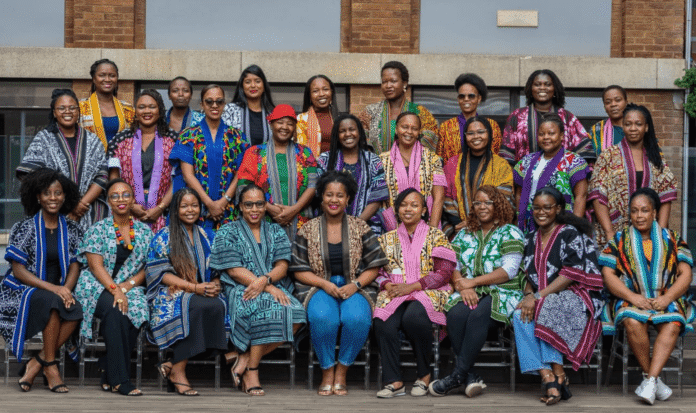
The Feminist Litigation Network Francophone West Africa (FLN-FWA) has been launched to confront the persistent legal barriers facing women across the region. Spearheaded by the Initiative for Strategic Litigation in Africa (ISLA), the network seeks to transform women’s access to justice through strategic litigation that goes beyond individual victories to systemic reform.
Across Francophone West Africa, women’s rights remain under persistent legal threat. Gender-based violence is rampant. Discriminatory laws govern inheritance, property, and family life. And despite robust frameworks like the Maputo Protocol and the SDGs, these instruments are rarely invoked in national courts. The gap between legal commitment and legal reality is wide and costly.
To close it, the Initiative for Strategic Litigation in Africa (ISLA) launched the Feminist Litigation Network for Francophone West Africa (FLN-FWA) at a strategic consultation held in Abidjan, Côte d’Ivoire. The network brings together lawyers, researchers, and civil society organisations to use strategic litigation as a tool for structural legal change, not just favourable verdicts, but reformed laws, stronger precedents, and lasting capacity.
In an interview with Kholekile Mnisi from Fence Africa 24, Dr Lesline Kouity, FLN-FWA Legal Manager, responded to questions on the network’s strategy, structure, and vision for transforming women’s access to justice across the region.
How does ISLA’s strategic consultation in Abidjan align with the African Union’s Agenda? 2063, particularly its goal of promoting gender equality and women’s empowerment?
The strategic consultation in Abidjan convened lawyers, legal experts, researchers, and NGO partners from Francophone West Africa. Together, they identified legal barriers to women’s access to justice, set shared litigation priorities, and formally launched the FLN-FWA. This established a foundation for ongoing regional collaboration.
This aligns with the African Union’s Agenda 2063, particularly Aspiration 3 (good governance, rule of law, and human rights) and Aspiration 6 (people-centred development, with emphasis on women and youth). The FLN-FWA advances legal accountability and women’s access to justice by translating Agenda 2063’s gender equality commitments into enforceable legal standards.
What specific outcomes do you aim to achieve through the Feminist Litigation Network (FLN), and how will they support the realisation of the Sustainable Development Goals (SDGs) in Francophone West Africa?
The FLN-FWA directly supports SDG 5 (gender equality), SDG 16 (justice and effective institutions), and SDG 10 (reducing inequalities). By challenging discriminatory laws, addressing gender-based violence, and removing barriers to socio-economic rights, the network strengthens the rule of law and improves women’s access to justice across the region.
Strengthening the Implementation of the Maputo Protocol
How does ISLA intend to utilise the FLN to support the implementation of the Maputo Protocol and other regional and international frameworks promoting women’s rights across Africa?
The Maputo Protocol is among the most progressive instruments in Africa. Yet it is rarely invoked before national courts. To address this, ISLA uses the FLN-FWA as a strategic tool for legal transformation. The network’s main objective is to strengthen the technical skills of lawyers and jurists in the region. This is especially important in WAEMU countries, where strategic human rights litigation is not widely practised.
The goal is to build a group of feminist lawyers skilled in African instruments, constitutional analysis, and comparative law. They focus on selecting cases with significant structural impact. This broadens litigation practices toward transformative outcomes. The FLN-FWA also promotes the effective use of the Maputo Protocol in national courts. It does this by integrating its provisions into legal briefs, raising judicial awareness, and encouraging interpretations consistent with states’ international commitments.
The aim is to establish the Protocol as a practical judicial standard, not merely a political commitment. When domestic remedies are inadequate, the network supports the use of regional and sub-regional mechanisms. This includes the African human rights system and ECOWAS. The network builds expertise in referral, admissibility, and forum selection. The broader goal is to engage regional courts in developing case law on gender equality and social justice.
Could you elaborate on how the FLN will tackle the specific challenges faced by women in Francophone West Africa, such as high levels of gender-based violence and limited access to justice?
Women in Francophone West Africa face persistent systemic challenges. These include high rates of gender-based violence, legal discrimination, economic barriers, and social pressures. Institutional instability further undermines their rights.
To address these issues, the network uses an integrated approach. It prioritises cases with potential for structural impact. These are cases that challenge discriminatory laws, improve judicial interpretation, and reinforce state obligations to prevent violence. They also set precedents that shape public policy.
The FLN-FWA builds the technical capacity of lawyers and jurists. It develops litigation strategies grounded in national constitutions, regional instruments, and comparative law. The aim is to transform individual injustices into drivers of systemic reform.
Through regional coordination, the network pools expertise and shares best practices. Efforts to address violence and barriers to justice are embedded in a structured ecosystem, not isolated actions.
How will the Expert Panel and Case Collaboration Partners (CCPs) collaborate to promote feminist litigation, and what are the anticipated outcomes regarding policy reforms and enhanced access to justice for women?
The FLN-FWA is built on a collaborative structure that combines strategic expertise with litigation implementation.
The Panel of Experts is composed of experienced lawyers, academics, and practitioners in human rights and gender justice. It is involved throughout the litigation process. The panel analyses case soundness, refines strategies, shapes arguments, and identifies relevant jurisdictions. Its work is supported by strategic analysis sessions and ongoing technical support. This enables collective assessment of each case’s transformative potential.
Beyond individual cases, the FLN seeks systemic change. It aims to influence national and regional case law, reform discriminatory laws, and integrate African and international standards into judicial decisions. Building lasting local capacity is also a priority. Together, these efforts position feminist litigation as a key driver of legal transformation.
How does ISLA plan to ensure that the FLN is inclusive and representative of diverse women’s voices, including those from marginalised communities, and that it prioritises the most urgent concerns of women in the region?
Inclusivity is central to the FLN-FWA. The network ensures diverse geographical and professional representation. It brings together lawyers from across Francophone West Africa. The aim is to build a core group committed to feminist strategic litigation within traditionally private legal systems.
The FLN also works with Local Coordinating Partners (LCPs). These are local entities that identify high-impact cases, engage communities, and provide legal, psychosocial, and community support. Litigation priorities are determined at the national level. This avoids a top-down approach and ensures alignment with women’s real needs.
How does ISLA select its Local Coordinating Partners (LCPs), and what are the primary criteria for their participation in the FLN, particularly concerning their experience in advancing women’s rights and engaging with marginalised communities?
LCP selection is based on strategic, technical, and contextual assessment. Selected organisations must have a stable institutional presence. They must also understand the legal and socio-political environment. The ability to systematically document women’s rights violations is equally required.
Priority is given to organisations with proven experience defending women’s rights. This includes work with GBV survivors and structurally discriminated groups. They must also have the capacity to analyse equality issues in their national context.
A key criterion is the ability to identify cases with strategic potential. These cases reveal systemic gaps in the law or in enforcement, going beyond individual legal support. LCPs must also follow a feminist approach. This approach is rooted in human rights, regional solidarity, and transnational collaboration, all of which are fundamental to the FLN’s mission.
Could you provide examples of successful partnerships or collaborations that have resulted from the consultation, and explain how they will be expanded to support the FLN’s objectives?
The Abidjan consultation established the FLN-FWA’s institutional and methodological foundations. This included CCP selection criteria, role definitions, and interaction frameworks with LCPs and the Panel of Experts. Initial memoranda of understanding were also drafted. Three experts joined the Panel and the first CCP was appointed. This marked the transition from planning to implementation.
This clarity ensures gradual, consistent recruitment aligned with a shared strategic vision. Scaling up will follow a gradual approach. This includes formalising partnerships, integrating new CCPs, and implementing case review mechanisms. Regular technical exchanges will be established. Capacity-building initiatives such as Litigation Institutes and specialised seminars will also be organised. The focus remains on controlled, sustainable growth rather than rapid expansion.
How does ISLA plan to engage with governments and other stakeholders to promote feminist litigation and support the FLN, especially in countries with hostile legal environments?
ISLA adopts a pragmatic, gradual approach grounded in local realities. Women are not a uniform group. Experiences of injustice vary across socio-economic, geographical, cultural, and health contexts. Inclusivity relies on strong community foundations.
The organisation works with community-embedded local partners and involves lawyers from diverse backgrounds. It uses a bottom-up approach to identify litigation priorities. Strategies are grounded in national realities: gender-based violence, economic exclusion, inheritance discrimination, and barriers to public services. This ensures legal actions address the needs of women most affected by structural inequalities.
The approach is explicitly intersectional. The FLN recognises that poverty, disability, and HIV can compound discrimination. Case selection integrates analysis of civil, political, economic, and social rights. Arguments on non-discrimination and substantive equality are central. Cases are always viewed within their broader structural context.
Our organisation engages with movements addressing disability and social justice. Strategies are adapted to national contexts. In politically sensitive situations, the approach remains cautious and context-aware. This protects partners and ensures legally sound strategies.
This inclusive methodology supports institutional dialogue grounded in states’ existing legal commitments. FLN strengthens local capacities, strategically selects cases, and gradually engages regional mechanisms. The aim is to advance equality and non-discrimination without increasing tensions. Throughout, the network remains sensitive to the realities of the most marginalised women.
How does ISLA intend to utilise the FLN to facilitate the realisation of national development plans and policies that advance women’s rights and empowerment in Francophone West Africa?
The FLN-FWA does not replace national public policies. It serves as a legal accountability mechanism to enhance their effectiveness. Many national development plans include commitments on gender-based violence, women’s empowerment, access to services, and political participation. Yet there is often a gap between these commitments and their implementation.
Through the use of strategic litigation when legal obligations are unmet, FNL supports judicial interpretations aligned with constitutional and international commitments. It also clarifies the legal scope of rights in national policies, reinforcing coherence between public policies, domestic standards, and international obligations.
What role do you see the FLN playing in promoting policy changes and reforms to tackle the specific challenges women face in the region, such as discriminatory laws and limited access to land and property?
The FLN seeks not only favourable outcomes in individual cases but also systemic change. Through strategic litigation and legal analysis, it challenges discriminatory laws and exposes gaps in protections against violence. It also promotes progressive interpretations of legislation and encourages parliamentary debate.
In areas like land and property, this approach clarifies equality principles and strengthens women’s inheritance rights. It also highlights conflicts between customary law, national legislation, and regional commitments. The FLN acts as a catalyst for reform, combining litigation, doctrinal expertise, and institutional dialogue.
How does ISLA plan to collaborate with regional economic communities, such as ECOWAS, to advance feminist litigation and support the FLN’s goals, especially in promoting women’s economic empowerment and access to justice?
At the sub-regional level, the FLN supports legal integration. It engages the ECOWAS Court of Justice in relevant cases, fosters case law on gender equality, and participates in access-to-justice debates. Women’s economic empowerment depends on effective legal protections. Regional integration must therefore include strong safeguards for fundamental rights. The FLN ensures the gender perspective is embedded in these initiatives.
Aligning Feminist Litigation with the African Development Bank High 5 Priorities
How does ISLA’s approach to feminist litigation in Francophone West Africa align with the African Development Bank’s (AfDB) High 5 priorities, especially the goal of advancing gender equality and women’s empowerment?
The African Development Bank’s “High 5” priorities, improving quality of life, industrialising, integrating, feeding, and electrifying Africa, all include a gender equality dimension. The FLN’s approach reflects this. Economic progress is not sustainable where women face legal disadvantages.
By improving women’s access to justice, protection against economic discrimination, and legal security in areas such as property and entrepreneurship, the FLN fosters a regulatory environment that supports inclusive and fair development. Gender justice is a fundamental condition for development, not a separate sector.
CHALLENGES AND OPPORTUNITIES
How does ISLA tackle the challenges of limited capacity and resources in feminist organisations, and what support does it provide to enhance their technical expertise and ensure sustainability?
In many Francophone West African countries, feminist organisations face significant constraints. These include chronic underfunding, reliance on short-term funding, and heavy workloads from direct survivor assistance. Access to strategic litigation expertise also remains limited.
ISLA addresses these challenges through an integrated approach. It combines technical capacity-building, strategic support, and institutional strengthening. The FLN offers in-depth training, case-specific technical assistance, and regional forums for exchange. It also supports partners in identifying high-impact cases. Beyond legal support, the goal is to build partners’ capacity for risk analysis, medium-term planning, and coordination across advocacy, litigation, and documentation. The sustainability of feminist litigation depends on strong local skills.
How does ISLA navigate hostile legal environments in certain countries, and what strategies does it employ to promote feminist litigation in these contexts, especially in terms of engaging with governments and other stakeholders?
In contexts with limited civic space, the FLN adopts a cautious and gradual approach. Case identification carefully considers risks for applicants and partners. Not all situations require direct confrontation. The network may instead use progressive legal interpretation, targeted technical solutions, or discreet legal awareness efforts.
When domestic remedies are insufficient, regional and sub-regional mechanisms offer alternative avenues for accountability. This applies where referral is legally and strategically appropriate. Even in sensitive contexts, the FLN maintains dialogue grounded in states’ existing legal commitments. The goal is to retain leverage and encourage gradual progress.
Could you share examples of successful feminist litigation cases in Francophone West Africa and the lessons they offer for promoting policy change and enhancing access to justice for women?
The FLN-FWA is still being structured and identifying cases. It draws on ISLA’s experience in several Anglophone countries. There, strategic litigation has strengthened protection against gender-based violence. It has also advanced women’s economic and social rights and clarified states’ positive obligations.
These experiences highlight key lessons. Strategic litigation must be part of a broader ecosystem. This includes documentation, community mobilisation, and post-decision monitoring. Rigorous case selection is essential for structural impact. Technical expertise in regional instruments and comparative law broadens the scope of decisions. Transnational collaboration amplifies impact by circulating legal strategies. The FLN-FWA adapts these lessons to Francophone West Africa’s civil law traditions, professional constraints, and political dynamics. The goal is to generate lasting progress in equality and access to justice.
How does ISLA ensure that the FLN is inclusive and representative of diverse women’s voices, including those from marginalised communities, and that it prioritises the most pressing concerns of women in the region?
Following the Abidjan consultation, the FLN-FWA is entering a phase of gradual operational structuring. Next steps include finalising memoranda of understanding with CCPs. Interaction mechanisms among CCPs, LCPs, and the Panel of Experts will also be formalised. Phased recruitment of new LCPs across Francophone West Africa will continue to expand the network’s reach.
This phase also involves identifying and analysing initial cases. Targeted capacity-building activities will be implemented. The Expert Panel will produce legal research and analysis to inform litigation practice and doctrinal debate.
In the short term (12 to 18 months), the goal is to consolidate the network’s internal structure and support initial strategic cases. In the medium term, the FLN-FWA aims to expand geographically and strengthen a sustainable regional mechanism. It will also contribute to the development of structured jurisprudence on equality. Implementation will remain gradual to ensure institutional strength and strategic coherence.
Measuring the Success of the Feminist Litigation Network Francophone West Africa
How will ISLA evaluate the success of the FLN, and what are the key indicators of progress, especially in terms of promoting policy changes and enhancing access to justice for women?
The success of the FLN-FWA will be measured through qualitative and structural indicators that go beyond favourable court rulings. A key marker will be the emergence of feminist lawyers trained in strategic litigation who can independently use regional and international instruments and integrate African standards into their arguments. The focus is on building sustainable regional expertise rather than isolated initiatives.
Institutional progress will be assessed through formalised partnerships, expansion into new countries, regular strategic case reviews, and the production of structured legal analysis. The network’s influence on legal debate and professional practice will also indicate its strength.
Legal impact will be measured by the increased use of African instruments in national courts, the development of case law grounded in substantive equality, and contributions to legislative reform. Most importantly, tangible improvements in women’s access to justice, particularly for those facing structural discrimination, will remain central.
Ultimately, success will depend on the FLN’s ability to institutionalise feminist strategic litigation and foster a lasting culture of legal accountability in Francophone West Africa. Technical seminars, regional meetings, and the gradual establishment of Litigation Institutes will strengthen skills, build cohesion, and entrench feminist litigation as a driver of long-term legal transformation.