


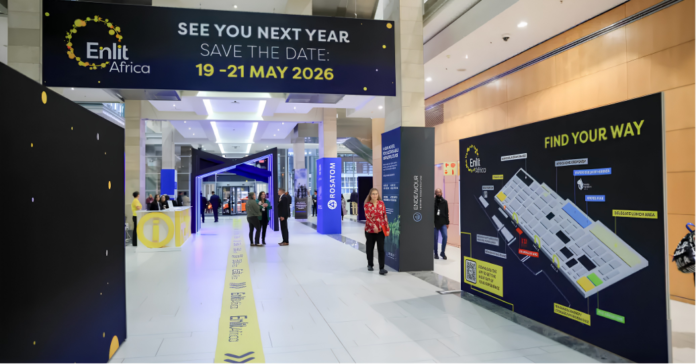
Enlit Africa, one of the continent’s leading gatherings across the water, energy, and power sectors, is set to convene from 19 to 21 May 2026 in Cape Town. Hosted at the Cape Town International Convention Centre, the three-day conference and exhibition focuses on the practical, policy, and investment challenges shaping the continent’s power and water sectors.
This year’s theme, “Compounding impact: small changes, outsized outcomes,” speaks to a growing conviction in the sector that targeted, incremental interventions, from distributed energy rollouts to localised grid upgrades, can produce transformative results at scale. The edition emphasises grid resilience, energy storage, and water security.
The event is expected to host more than 280 speakers, 250 exhibitors, and 7,200 attendees drawn from utilities, investors, policymakers, innovators, and thought leaders across the continent and beyond, all convening to explore the strategies, technologies, and investment pathways needed to support Africa’s evolving energy transition.
Set against the backdrop of a continent navigating both persistent energy challenges and emerging opportunities, Enlit Africa unfolds at a critical moment for the sector. While countries like Kenya and Ethiopia are accelerating investments in renewable energy, signalling the potential for a more sustainable and self-sufficient future, much of Africa continues to grapple with infrastructure constraints, uneven access to electricity, and climate-related pressures on water and power systems.
This dual reality, where rapid innovation coexists with systemic challenge, is further reflected in the continent’s untapped capacity, with only around 10% of its hydropower potential currently developed. These dynamics underscore the urgency and relevance of the conversations scheduled for Enlit Africa.
In South Africa, where the conference will be hosted, these challenges carry particular weight. The country’s recent history of load shedding, driven largely by Eskom’s constraints, brought the urgency of reform and the need for a more resilient, diversified energy mix into sharp relief.
While efforts to stabilise the grid and expand private-sector participation have made meaningful progress, the structural work of transformation is far from complete. Against this backdrop, Enlit Africa serves not only as a platform for dialogue but as a timely meeting point for the stakeholders shaping the future of the country’s energy landscape.
This year’s edition is expected to place a strong emphasis on practical solutions and cross-sector collaboration. The 2026 programme delivers a multi-stream conference with expert-led discussions spanning policy and regulation, generation, transmission and distribution, renewables, storage, digitalisation, municipal infrastructure, and the water-energy nexus.
These focus areas reflect a growing recognition that Africa’s energy transition cannot be addressed in isolation. It requires integrated approaches that bring together infrastructure development, technological innovation, and policy reform.
The programme opens with the Project and Investment Network Business Breakfast, where discussions centre on bankability, procurement confidence, and the practical steps that move projects from intent to execution, anchored by keynote commentary from Bruce Whitfield and a fireside chat with Goolam Ballim, Chief Economist and Head of Research at Standard Bank Group.
From there, the programme spans three days of plenary sessions, technical workshops, and a major exhibition floor bringing together solution providers, developers, and investors from across the value chain. On 22 May, delegates will also have the opportunity to visit Koeberg Nuclear Power Station and the V&A Waterfront Desalination Plant.
The opening keynote, Africa in the AI Age, will feature contributions from policymakers and industry leaders, including a ministerial address by the Honourable Dr Kgosientsho Ramokgopa, South African Minister of Electricity and Energy. The session will explore digitalisation, energy storage, and the role of artificial intelligence in transforming power systems.
A subsequent keynote will examine the growing interdependence between energy and water systems, with a high-level panel featuring Sabine Dall’Omo, CEO of Siemens South Africa, to discuss coordinated planning and long-term resilience. A new African Nuclear 2.0 session will also examine the shift from nuclear planning to implementation across the continent, signalling how far the conversation has evolved beyond renewables alone.
Taken together, the programme reflects a shift from broad dialogue to actionable outcomes. There is a strong emphasis on investment readiness, governance, and practical mechanisms to accelerate Africa’s energy transition. The Project and Investment Network has facilitated over $3 billion in project pitches over the past two years. This underscores the weight of commercial intent behind the conversations.
As the continent continues to navigate the intersecting pressures of energy insecurity, climate variability, and infrastructure development, the need for coordinated, scalable, and investable solutions grows more urgent by the year.
The energy landscape is shifting: in East Africa, in the reforms underway in South Africa, and in the emerging financing frameworks beginning to unlock capital for the sector more broadly. The conversations, partnerships, and commitments formed at Enlit Africa are positioned to shape not only this moment but the longer-term trajectory of the continent’s transition toward a more resilient and integrated energy system.