


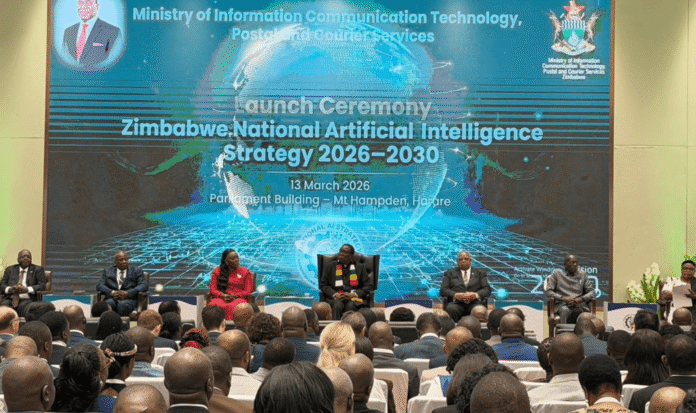
Zimbabwe National Artificial Intelligence Strategy 2026–2030 has been launched to guide digital transformation and support the growth of a knowledge-based economy.
The government announced the strategy on 13 March at the new Parliament building in Mount Hampden, under the theme ‘Harnessing AI for Inclusive Development.’ Officials say the plan aims to accelerate digital transformation and support economic growth. It also seeks to improve Zimbabwe’s standing in Africa’s technology sector.
President Emmerson D. Mnangagwa addressed delegates from the ICT and telecommunications sectors. He said the strategy is part of a broader national plan focused on digital infrastructure. ” It is pleasing that under the Second Republic, the Government has been purposeful in building and facilitating digital infrastructure that forms a solid base to support our country’s development aspirations,” he said.
President Mnangagwa pointed to expanded mobile coverage and increased internet access as evidence of progress. He said continued investment in telecommunications is enabling innovation and inclusion. Officials say improved connectivity is necessary for the adoption of artificial intelligence. This relies on reliable broadband, data access, and skilled workers.
The government maintains that recent upgrades to digital infrastructure have enabled the national AI strategy. The strategy also emphasises young people, whom the president described as central to developing a competitive AI sector.
Policymakers say Zimbabwe’s young population makes digital skills important for job creation and economic diversification. The AI strategy aims to connect universities, research centres, and private companies. Together, they will develop local solutions across sectors such as agriculture, healthcare, mining, and public services.
Officials say the aim is not only to adopt global technologies but also to build local capacity to create digital services and solutions for export.
Officials say artificial intelligence could improve productivity, governance, and efficiency across industries. They argue that effective management will be necessary for Zimbabwe to meet its development goals.
At the same time, they acknowledge the risks associated with new technologies. President Mnangagwa said there is a need for legislative frameworks to ensure the ethical and responsible use of AI.
He said it is important to protect minors online and promote safe digital use. Officials say policymakers will need to balance technological progress with regulation. This includes measures to prevent misuse, data breaches, and digital exclusion.
The United Nations Country Coordinator, Edward Kallon, attended the event, reflecting international interest in Zimbabwe’s digital plans.
Zimbabwe has joined Rwanda, Kenya, and Egypt in launching a national AI plan. This is part of a wider effort across Africa to keep up with global technology trends. Officials acknowledge that the main challenge will be implementing policy and achieving tangible results.
The country continues to face infrastructure gaps, limited funding, and a shortage of skilled workers. Despite these issues, the government says digital transformation remains central to its development agenda. Zimbabwe aims to reposition itself in Africa’s technology sector. The goal is to move from being a consumer of imported digital tools to a contributor to regional innovation.
Officials say the success of Zimbabwe’s AI strategy will depend on effective implementation and continued commitment. The goals include inclusive development and economic renewal.