


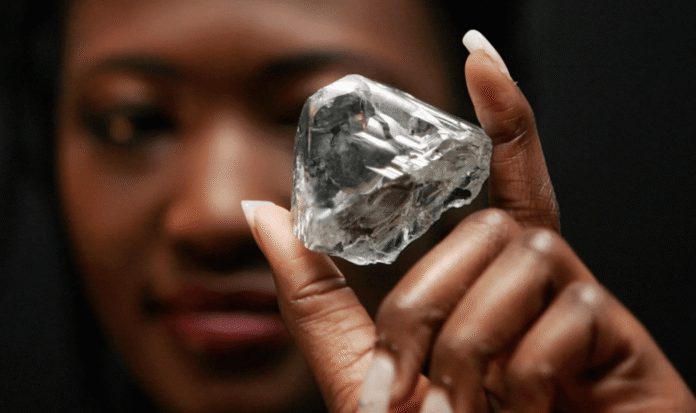
South Africa rough diamond export rules are reshaping the country’s diamond industry by requiring producers to prioritise local buyers before shipping stones abroad.
This move directly reinforces South Africa’s policy of cutting and polishing diamonds domestically rather than exporting them in their raw form.
Mining companies must now offer rough diamonds to local cutters and polishers at prices and assortments considered reasonable for processing. The aim is to make it commercially viable for local businesses to compete with international buyers.
These rules add to existing requirements. Producers already have to make 10% of their output available to the State Diamond Trader, which supplies local manufacturers. Now, any remaining rough diamonds must also be offered to local buyers before export.
Exporters must prove they have met local demand before shipping diamonds abroad. Officials say the new approach aims to fix a long-standing imbalance. South Africa, despite being a major diamond producer, exports about 90% of its rough stones for cutting and polishing abroad, mainly to India and Belgium.
As a result, organisations create most of the value-added work and related jobs outside South Africa, which could support local employment and economic growth. Rules come as the global natural diamond industry faces growing pressure. Lab-grown diamonds have taken a larger share of the market by offering lower prices and a steady supply. These shifts reduce profit margins for natural diamonds.
The government wants to prevent further losses in the local diamond industry as the market shifts. By demanding better terms for local buyers, regulators hope to increase domestic cutting and polishing, support local businesses, protect skilled jobs, and create new employment opportunities.
Beneficiation has been part of South Africa’s industrial strategy for years, but miners have often resisted, arguing that forced local sourcing harms competitiveness. The new guidelines focus on fair pricing and commercial viability instead of adding more quotas.
The State Diamond Trader remains central to the new framework. Its mandate is to promote equitable access to rough diamonds for local manufacturers. This is especially important for small and medium-sized enterprises that might struggle to compete with large international buyers.
By keeping 10% of production for local use and ensuring more diamonds remain available at home before export, the government aims to strengthen the link from mine to workshop.
Local manufacturers have long struggled to secure a steady supply of diamonds at workable prices. Industry insiders say unpredictable pricing and assortments unsuited to local cutting skills prevent manufacturers from growing or planning for the future.
The regulator’s new rules address this shortage directly. In addition to supply changes, South Africa’s cabinet has approved a plan for the diamond industry to pay 1% of its annual rough sales to support global marketing of natural diamonds.
This step responds to dropping demand and rising competition from synthetic diamonds in key markets.
The marketing fund will support international campaigns to promote the heritage, rarity, and emotional value of natural diamonds. For countries like South Africa, keeping up demand is vital for both miners and manufacturers. Both rely on steady global sales.
Diamonds remain important to South Africa’s mining economy, even as their share declines. Building local manufacturing could capture more value, boost domestic jobs, and support economic development compared to exporting raw stones.
Cutting and polishing diamonds create skilled jobs, generate income, boost jewellery-making, and stimulate related services such as design, logistics, and certification. These activities increase employment opportunities and economic growth. South Africa’s labour costs are higher than those in major cutting hubs such as Surat, India. Local manufacturers will need to achieve efficiency gains, implement technological upgrades, and benefit from supportive policy frameworks to compete effectively.
Critics say that stricter export controls could scare off investment if not managed well. Supporters argue that without strong action, South Africa will continue to export value and import finished products.
These guidelines are more than a regulatory change. They signal a new valuation of South Africa’s minerals. By insisting on value addition, Pretoria makes it clear that exporting rough diamonds without local processing is no longer enough.
If these reforms work as planned, they could strengthen local manufacturing and help South Africa become known not just as a diamond producer, but also as a diamond processor.
The main challenge now is turning policy into real growth, so South Africa’s diamond industry can create more jobs, boost local business, and maximise value by finishing more stones at home before export.