


South Africa’s property market is showing renewed strength. The emerging South Africa real estate boom reflects improving macroeconomic conditions, rising home loan approvals and bold policy reform around public assets.
After years of stagnation, the market is regaining confidence. Lower inflation and stabilising interest rates have begun to unlock demand across multiple price bands.
Inflation and Interest Rates Support the South Africa Real Estate Boom
Consumer Price Inflation averaged 3.2% in 2025. That is down from 4.4% in 2024 and marks the lowest annual rate since 2004. Lower inflation has eased pressure on households and improved affordability.
Quarter 4 2025 statistics from ooba Home Loans confirm the trend. The volume of granted home loans rose 9% year-on-year. More importantly, the value of granted bonds increased by 17%.
This gap signals stronger activity in higher price brackets. It also reflects rising approval of 100% loan-to-value bonds. The national average purchase price increased by 3.6% in 2025. That figure slightly exceeded inflation. For the first time since 2020, first-time buyers showed meaningful growth. They accounted for 46.7% of all home loan applications.
The average purchase price paid by first-time buyers rose by 4.4%, exceeding overall market growth. Rhys Dyer, CEO of the ooba Group, says conditions are supportive. “Coupled with a stronger rand, softer global oil prices and a favourable outlook on staple food costs… there is clear scope for a 25 basis point cut in Q1 ’26,” he said.
He added: “With further rate cuts on the horizon, supportive lending conditions and improving household affordability, the stage is set for a stronger rebound in first-time buyer activity in 2026.”
Coastal regions continue to outperform. The Western Cape recorded an 88.3% home loan approval rate. KwaZulu-Natal followed at 84.4%, with the Eastern Cape at 84.3%.
Banks have also improved rate concessions. The national weighted average concession reached -0.67% below prime in Q4 2025. Competitive lending has strengthened buyer confidence.
Investor appetite remains steady. Although freestanding homes recorded stronger price growth (+4.0%) than sectional title properties (+2.7%), investors still favour sectional title units. In 2025, 66% of individual buy-to-let applicants chose this segment.
Government Reform Fuels the South Africa Real Estate Boom
The South Africa real estate boom is not driven by private demand alone. Government policy reform is reshaping the broader property landscape.
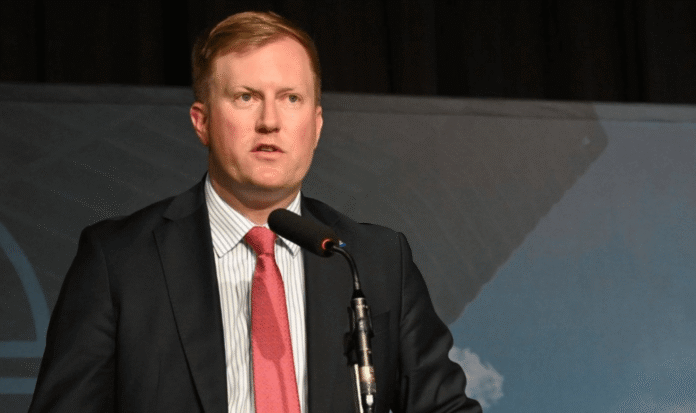
In Parliament, Minister of Public Works and Infrastructure Dean Macpherson announced the creation of a South African Property Investment Vehicle. He described it as “the most significant change in the management of state property since 1994.”
For years, the state has owned vast property assets while leasing private buildings at high cost. Macpherson highlighted the contradiction.
“We own prime property that stands vacant, yet we pay rent for plush offices,” he said. “We sit on an enormous asset value base, yet we don’t generate any revenue to fund asset maintenance. These contradictions end today.” The new investment vehicle will consolidate income-generating public assets into a professional structure. The aim is to unlock value and reinvest in maintenance and development.
“It is a ring-fenced, professionally governed investment platform… to unlock value for reinvestment,” Macpherson told Parliament. “This is how property stops being a liability and starts being an asset.”
Urban Regeneration and Job Creation
One flagship initiative is the government precinct programme in Tshwane. It includes 30 projects covering more than one million square metres. Phase 1 alone could eliminate over R400 million in annual lease costs. Once complete, the portfolio may be valued between R45 billion and R55 billion.
Macpherson also referenced projects such as converting Telkom Towers into productive office space. Underutilised defence land in Youngsfield and Wingfield may be redeveloped into new communities.
“It means well-located public land in the inner city of Johannesburg being used for housing, not standing fenced off or unlawfully occupied,” he said.
The programme could create nearly 100,000 direct and indirect construction jobs. It may catalyse up to R60 billion in urban economic activity.
“We are determined to be solutions-orientated to unlock growth and jobs for all South Africans,” Macpherson said. “We continue to turn South Africa into a construction site.”
The South Africa real estate boom reflects more than cyclical recovery. It signals structural repositioning.
Private demand is strengthening. First-time buyers are returning. Banks are competing aggressively. Meanwhile, public asset reform may unlock dormant value across major metros.
If 2025 marked stabilisation, 2026 could mark acceleration. Lower rates, stronger affordability and infrastructure-led regeneration may combine to shift the market from recovery to real momentum.
South Africa’s real estate narrative is evolving. It is no longer only about interest rates. It is about reform, reinvestment and long-term value creation.